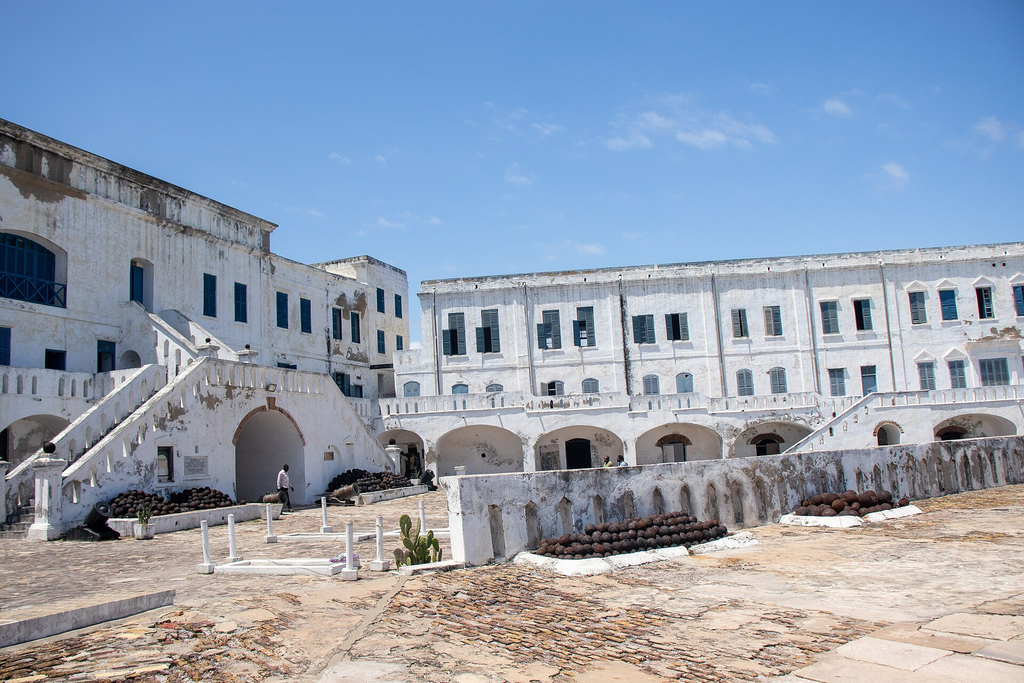
“The Cape Coast Castle located in Cape Coast Ghana.jpg” — Photo by Treysam, licensed under CC BY-SA 4.0.
I’ve had such beautiful experience with Cape Coast, watching my short visit quickly become a much fuller trip. The Atlantic coast, historic castles, old forts, fishing communities, rainforest trails and nearby heritage sites all sit within reach of one another. Yet, they offer very different experiences. For anyone planning things to do in Cape Coast, the best days usually happen when you combine the major historical sites with time outdoors and enough room to see how the city itself works.
Cape Coast also works especially well as a base for exploring this part of Central Region. You can reach Elmina, Kakum National Park, Assin Manso and several smaller coastal communities in organized day trips. Trust me, such trip can appeal to history enthusiasts, nature lovers, beach travellers, photographers and visitors interested in Ghanaian culture.
Here are 20 experiences worth considering, with practical information to help you organise them into a realistic trip.
1. Take a Guided Tour of Cape Coast Castle
Start with the site that has shaped much of Cape Coast’s place in Ghanaian and African history. Cape Coast Castle was constructed in the seventeenth century and later became one of the major centres involved in the transatlantic slave trade. Today it operates as a historical museum under the Ghana Museums and Monuments Board.
The guided visit covers the dungeons, condemned cell and the Door of No Return, while the museum inside the complex places the castle’s history within the wider story of European trade, African societies and the African diaspora. GMMB currently lists the castle as open daily from 9am to 4:30pm. Its published adult rate is GH¢20 for Ghanaian adults and GH¢80 for non-Ghanaian adults, with those listed fees reviewed in July 2023.
Give yourself at least two hours here. The museum and guided tour contain enough detail to justify a substantial part of the morning.
2. Climb to Fort William for a Different View of Cape Coast
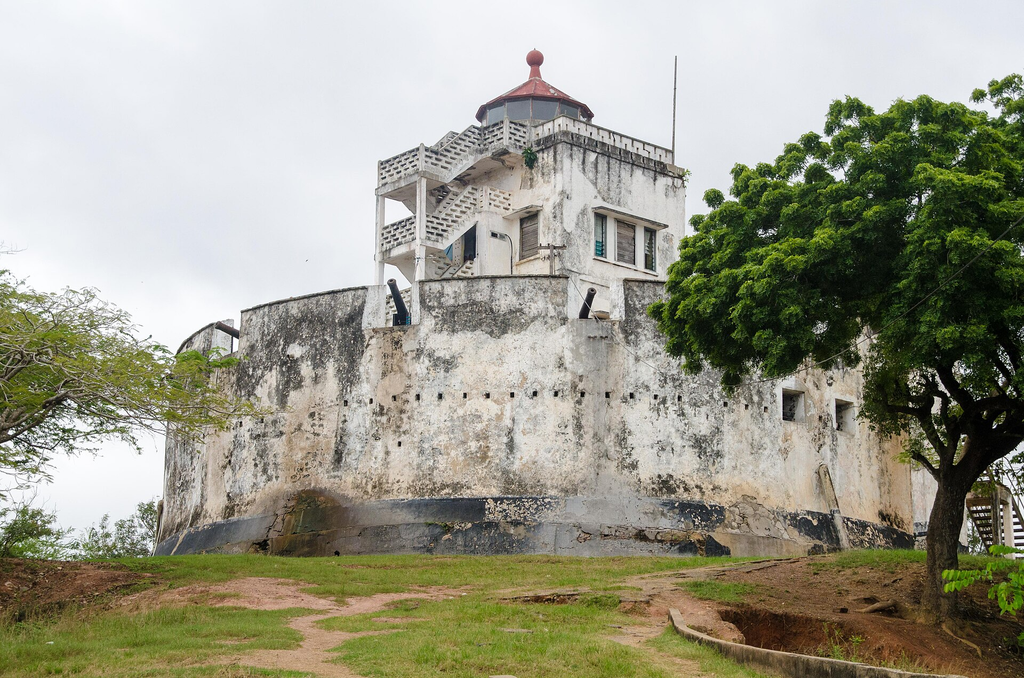
“Fort William (3 of 9).jpg” — Photo by Owula kpakpo, licensed under CC BY-SA 4.0.
Fort William, also known as the lighthouse, stands on Dawson’s Hill above the town. It was built in 1820 on the site of an earlier lookout post and was later converted into a lighthouse. Today the structure remains under the care of GMMB.
The attraction is partly historical and partly geographical. From the hill, you get an elevated view across Cape Coast, the Atlantic and the older sections of the town. GMMB currently lists opening hours from 9am to 4:30pm daily.
It works well after a morning at the castle, especially if you want to see how the old fortifications relate to the town around them.
3. See Cape Coast From Fort Victoria
Fort Victoria was constructed in 1821 on the site of an earlier fortification and occupies a hill on the western side of Cape Coast. It functioned as an outlook and signalling post, giving it a strategic position over both the town and the Atlantic coast.
The fort is smaller than Cape Coast Castle, so the visit is shorter, but the elevated setting makes it useful for anyone interested in the city’s military history and coastal geography. GMMB currently lists the site as open daily from 9am to 4:30pm. You should it to a historic Cape Coast day if you want more than one perspective on the city’s old defensive system.
4. Walk Through Cape Coast’s Older Neighbourhoods
Cape Coast is more than its monuments, and some time spent simply moving through the older parts of town adds context to the major attractions. You will see churches, colonial-era structures, roadside food stalls, shops and fishing activity sharing the same urban space.
The Central Regional Coordinating Council describes the wider region through its fishing communities, historic forts and castles, posuban shrines, vibrant markets and festivals, all of which remain part of its cultural landscape.
This works best as a guided walk or a short local exploration around the historic centre. You are seeing a living city!
5. Tour Elmina Castle
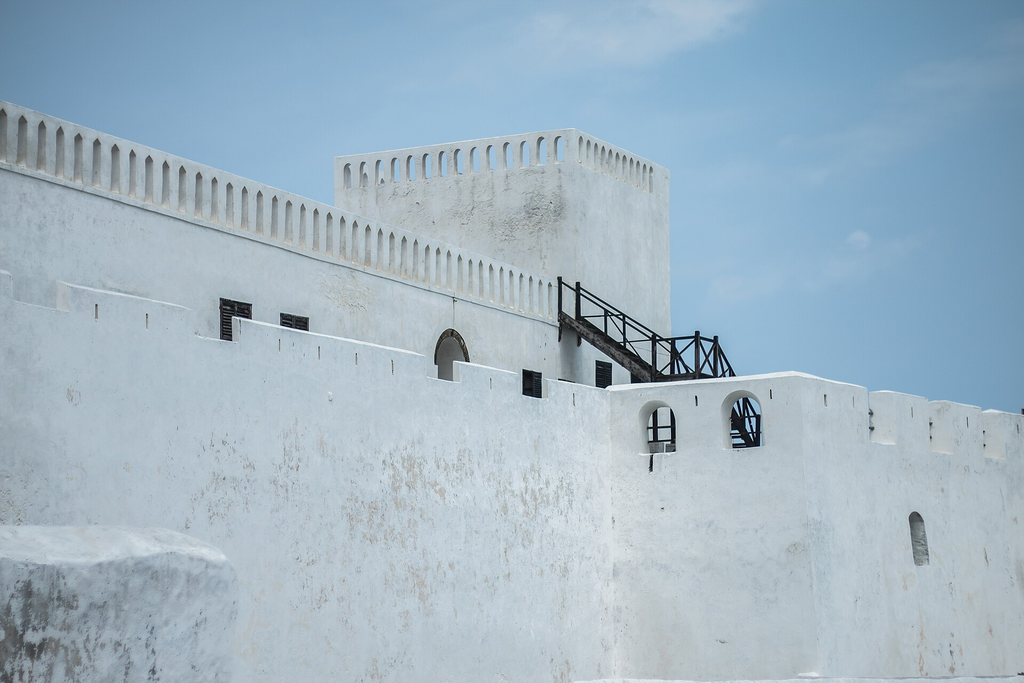
“Elmina Castle – Elmina, Ghana.jpg” — Photo by Brans Wyte GH, licensed under CC BY-SA 4.0.
Elmina is close enough to Cape Coast to form part of the same heritage circuit, and Elmina Castle adds an important second perspective. St George’s Castle, generally known as Elmina Castle, was built by the Portuguese in 1482 and later captured by the Dutch. It is now a museum and forms part of the UNESCO-listed forts and castles along the Ghanaian coast.
The guided experience takes visitors through former trading areas, courtyards, dungeons and other historic rooms. GMMB currently lists the castle as open daily from 9am to 4:30pm.
I recommend treating Cape Coast Castle and Elmina Castle as two separate experiences. Their histories are connected, but their architecture and physical settings are noticeably different.
6. Visit Fort St. Jago for the Elmina Harbour View
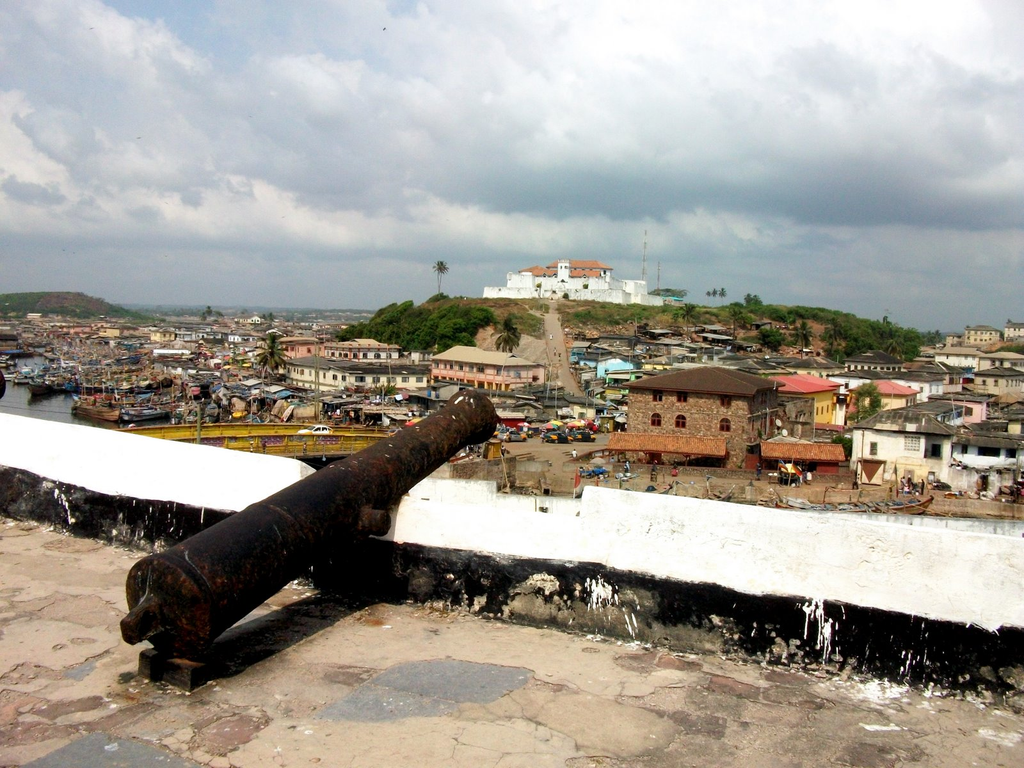
“Fort St Jago from Elmina Castle.JPG” — Photo by Peter Fitzgerald, licensed under CC BY 3.0.
Fort St. Jago sits on a hill overlooking Elmina Castle and the fishing harbour. The Dutch used the fort as a military position, and it later served several other purposes, including use as a prison. GMMB currently preserves the fort and lists opening hours of 9am to 4:30pm.
The main attraction for a visitor is the view. From the elevated position, you can see the castle, harbour, lagoon and surrounding town in a way that is difficult to appreciate from street level. It is a particularly useful stop after touring Elmina Castle.
7. Watch the Fishing Boats Arrive at Elmina Harbour
For one of the most vivid everyday experiences near Cape Coast, go to Elmina’s fishing harbour early in the morning. The Benya Lagoon is lined with hand-painted canoes, and the landing activity is strongest around the early morning period when boats return with their catch. Current tourism information recommends roughly 6am to 9am for seeing the harbour at its busiest.
This is a working harbour, so visitors need to move with some awareness of the people actually using the space. Ask before photographing individuals, especially fish sellers, and expect a busy, wet environment around the quay. For photographers and travellers interested in everyday coastal life, this is one of the most distinctive things to do Cape Coast offers.
8. Walk the Canopy at Kakum National Park
Kakum National Park is the major nature excursion around Cape Coast and deserves at least half a day. The Forestry Commission describes the wider Kakum Conservation Area as about 350 square kilometres of mainly rainforest, supporting roughly 40 mammal species, about 200 bird species and more than 400 butterfly species.
The famous canopy walkway carries visitors above the forest on suspended bridges, while trails and guided walks provide a closer look at the vegetation and wildlife. The Forestry Commission describes the walkway as almost 500 metres long, although this isn’t the final confirmed length.
Visit Ghana currently lists operating hours of 6am to 4pm. Arrive early enough to enjoy the forest before the day becomes hotter and busier.
9. Take a Guided Forest Trail at Kakum
The canopy walkway receives most of the attention, but Kakum’s trails offer a different experience. Guides interpret the forest, explaining the uses of trees and plants, local stories, cultural knowledge and the ecological importance of the area. The Forestry Commission specifically lists walking trails and viewing platforms among the park’s activities.
This is particularly worthwhile for travellers interested in ecology, birdwatching and photography. You are spending more time inside the rainforest itself.
10. Visit Assin Manso Ancestral Slave River Park
Assin Manso takes the heritage story farther inland. The site was one of the important gathering points along the historic slave-trade route through the Central Region, and the present-day visitor experience includes the slave river, memorial wall and ancestral burial sites.
Visit Ghana places Assin Manso about 40 kilometres along the Cape Coast-Kumasi highway from the Yamoransa junction. The site includes Donkor Nsuo, traditionally described as the place where captives took their last bath before continuing towards the coastal forts.
This is an important addition to the Cape Coast attractions circuit for visitors who want to understand the inland part of the route that eventually reached the castles.
11. Explore Fort Amsterdam at Kormantin-Abandze
Fort Amsterdam lies farther east along the Central Region coast in Kormantin-Abandze and works best as part of a longer coastal heritage drive. The fort overlooks a coconut-lined beach and has a history involving both British and Dutch control. GMMB says the fort was restored in 1951 and is currently open to the public.
It gives visitors a chance to see one of the smaller coastal fortifications that formed part of the Gold Coast trading network. The setting also makes it useful for travellers who want some landscape and coastal scenery alongside the historical site.
12. Stop at Hans Cottage
Hans Cottage sits on the road connecting Cape Coast Castle and Kakum and is one of the easiest places to add to a nature-focused day. The hotel and visitor stop is built around a lake where crocodiles, weaverbirds, egrets and other wildlife can be seen. The site also offers boat rides, fishing, sailing, an outdoor pool, a restaurant and gardens.
Visit Ghana places Hans Cottage about 11 kilometres from Cape Coast Castle and 8 kilometres from the University of Cape Coast. It works especially well as a lunch stop after Kakum, giving you somewhere to slow down before returning into the city.
13. Spend an Afternoon at the Coast
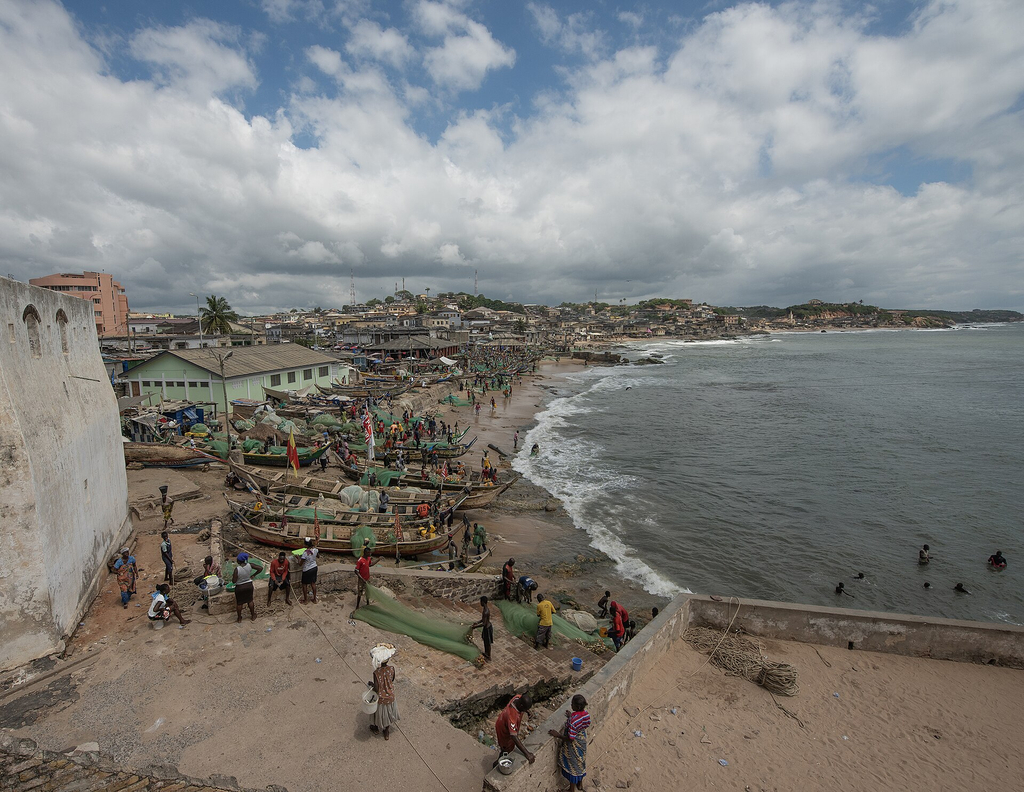
“Cape Coast fishing boats by the coast.jpg” — Photo by Kradolferp, licensed under CC BY-SA 4.0.
Cape Coast is not built entirely around resort tourism, but the Atlantic shoreline gives you plenty of room to slow down after a history-heavy morning. The Central Region is known for its palm-lined beaches, fishing towns and coastal landscapes, and several beach properties around Cape Coast and Elmina cater to day visitors and overnight guests.
Coconut Grove Beach Resort in nearby Elmina and Anomabo Beach Resort farther east both provide organised coastal settings for travellers who want swimming, food and time near the sea.
The beach portion of your itinerary is best planned as a proper afternoon, giving it room to become a relaxing part of the trip.
14. Explore Anomabo’s Coastal Setting
Anomabo lies east of Cape Coast and gives visitors a quieter alternative to staying entirely around the city. It remains a working fishing town and is surrounded by coastal scenery, making it useful for travellers who want to extend their Cape Coast trip beyond the main heritage sites.
Anomabo Beach Resort describes the town as a quieter coastal base that can work for travellers dividing their time between Cape Coast Castle, Kakum and the beach. You can combine Anomabo with Fort Amsterdam and other coastal sites farther east if you have a vehicle and want to turn it into a full-day road trip.
15. Experience Oguaa Fetu Afahye
If your trip falls around early September, look out for Oguaa Fetu Afahye, the major traditional festival of the Cape Coast area. Visit Ghana identifies the celebration with purification rites, drumming, dancing, traditional processions, regattas on the Fosu Lagoon and a grand durbar, with the main celebration taking place on the first Saturday of September.
The festival follows its own traditional customs and ceremonial structure, so visitors should follow local guidance and treat sacred activities with appropriate respect. For travellers interested in living culture, Fetu Afahye offers something that a museum visit cannot reproduce: the city’s traditional identity being expressed by the community itself.
16. Experience Elmina’s Bakatue Festival
Another useful event to build a trip around is Edina Bakatue in Elmina, which marks the opening of the fishing season. The 2026 festival ran from 6 to 11 July and included rituals around the Benya Lagoon, canoe displays, music, dance and other cultural events.
Bakatue offers a different cultural experience from the castles and museums, particularly for visitors interested in the relationship between Elmina’s traditional authorities, lagoon, fishing economy and community life. Check the annual festival calendar when planning dates, since the timing is seasonal.
17. Walk Around the University of Cape Coast Area
The University of Cape Coast occupies a large hilltop area above the city and is one of Ghana’s major educational institutions. Even for visitors who are not attending the university, the campus and surrounding hills give you a different perspective on the city.
The university’s Science Botanical Garden was established in 1970 for research, teaching and recreation and contains tropical and exotic plant species. Access is primarily connected to the university community, so this is best arranged locally instead of treated as a standard public tourist attraction. The main appeal is the elevated landscape and the opportunity to see a part of Cape Coast shaped by student life and education.
18. Browse Local Crafts and Regional Products
Cape Coast and the wider Central Region have a strong craft tradition, and shopping for locally made work can be a fantastic way to finish a sightseeing trip. Visit Ghana identifies Ajumako as a craft area known for royal regalia, stools, linguist staffs and clan totems, while the region more broadly is known for traditional artistic production.
Inside Cape Coast, your hotel or a local guide can point you towards current traders and craft sellers. Look for pieces that have an identifiable connection to the Central Region and its traditions. This gives your trip a practical cultural dimension, particularly if you want to take a small piece of the region home.
19. Explore Elmina’s Historic Townscape Beyond the Castle
Elmina deserves time outside the castle itself. The historic town contains the fishing harbour, Fort St. Jago, traditional posuban structures, old streets and the lagoon, creating a much broader heritage landscape around the main monument. GMMB specifically notes Fort Coenraadsburg, the Dutch cemetery and Elmina’s posuban buildings among the nearby sites.
Walking through these areas after the castle tour gives you a stronger sense of the town as a historic settlement and fishing community. If your schedule allows, this is the part of the Elmina visit that I would leave open-ended and simply enjoy.
20. Build a Cape Coast–Elmina–Kakum Heritage Circuit
One of the most practical ways to experience the area is to plan the major sites as one connected circuit. Start at Cape Coast Castle in the morning, continue to Elmina for the castle and Fort St. Jago, then finish with the fishing harbour or a coastal meal. Kakum can occupy the following morning, with Hans Cottage added on the return journey.
Ghana’s national tourism planning documents specifically identify Cape Coast, Elmina and Kakum as a connected tourism node, while the Central Regional Coordinating Council also presents them as key attractions within the same regional tourism circuit. This arrangement saves time and gives the trip a natural rhythm: history in the city, coastal life in Elmina and rainforest at Kakum.
How Many Days Do You Need?
Three days gives you enough time to experience the major things to do in Cape Coast, while four or five days allow you to spread the trip out and add destinations farther from the city.
A longer stay is particularly good if you want to include Assin Manso, Fort Amsterdam, Anomabo or one of the region’s festivals. It also gives you time to experience Cape Coast itself at a slower pace.
Final Thoughts
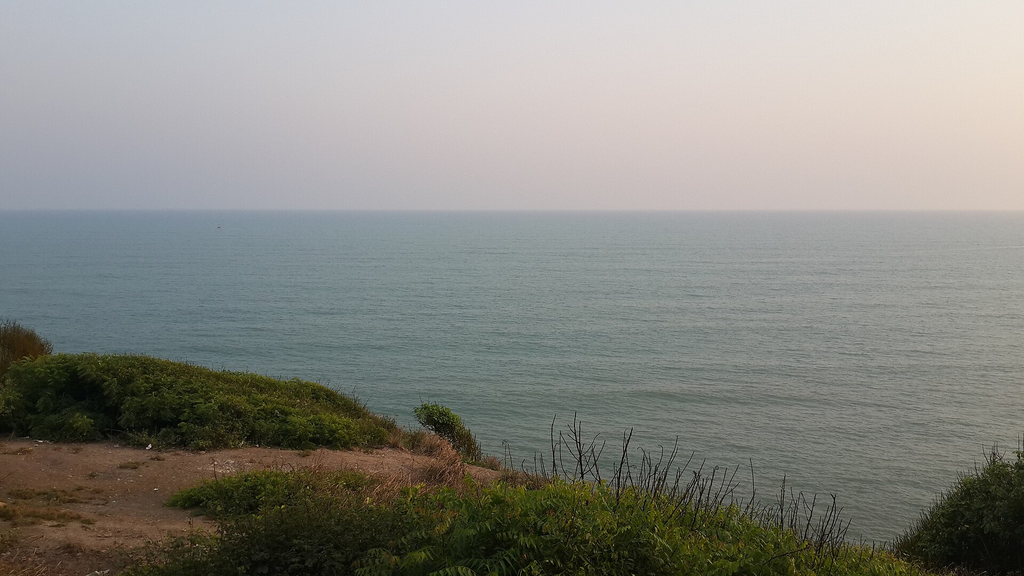
“Komantin Beach From Fort Amsterdam.jpg” — Photo by YawAnsong, licensed under CC BY-SA 3.0.
The best things to do in Cape Coast come from experiencing the city as a complete coastal and historical destination. The castles are essential, but the old forts, fishing communities, rainforest around Kakum, inland heritage sites, beaches and traditional festivals show you much more of the region.
For a first visit to Cape Coast Ghana, I would build the trip around three foundations: spend proper time at Cape Coast Castle, dedicate a full day to the Elmina and coastal circuit, and reserve another day for Kakum National Park and one of the surrounding heritage excursions. That combination gives you a balanced introduction to the history, landscape and contemporary life of the area.
For the broader destination overview, continue to our Cape Coast travel guide, then explore our dedicated guides to Cape Coast Castle and Kakum National Park.