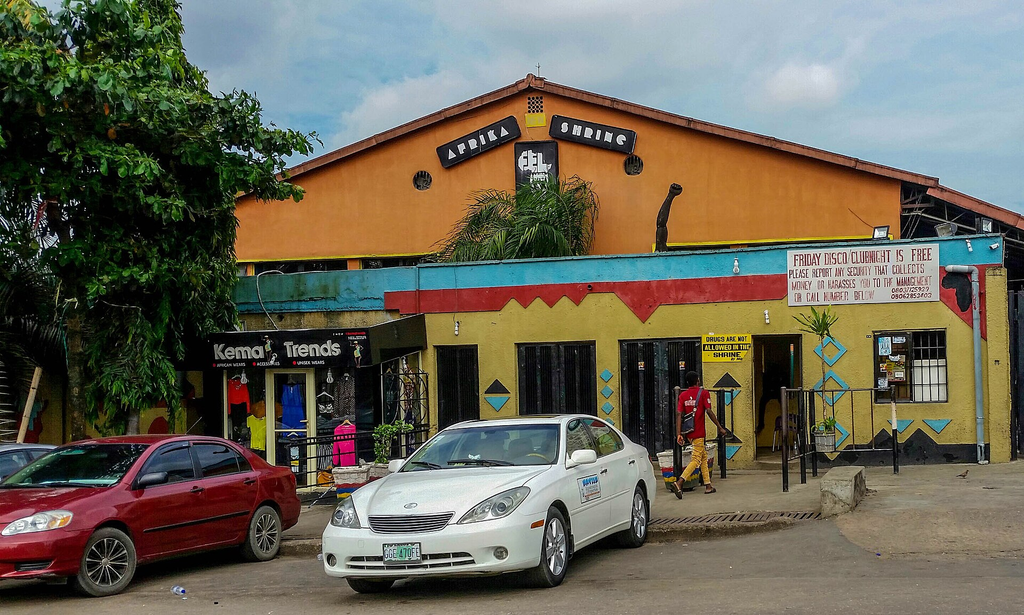
“New Afrika Shrine” — Photo by Comradeayobami, licensed under CC BY-SA 4.0.
You can never run out of things to do in Lagos. As a matter of fact, you will be overwhelmed with activities and would need to focus more on which to actually get done. There are museums and galleries, beaches and resorts, live music venues, markets, theatres, conservation projects, restaurants and neighbourhoods that reveal different sides of the city once you spend a little time in them. For me though, the most interesting things to do in Lagos are spread across the Island and Mainland. You can build a day around history, food, art or the outdoors; you’re boundless.
I have put together this list to cover as much of Lagos as possible, with each activity offering a different reason to go. Some are established Lagos attractions, while others are experiences that show you how people actually spend their time in the city.
1. Walk Through the Historic Core of Lagos Island
Start in central Lagos Island and spend a few hours seeing the older side of the city on foot. The area around Marina, Broad Street, Tinubu Square, Campos and the old commercial quarters gives you a sense of Lagos as a historic port and trading city, with colonial-era structures standing alongside churches, markets, offices and densely packed streets.
This is one of the better places to visit in Lagos for understanding how the city developed before the modern Island districts took over much of the visitor attention. You can combine a walk through the historic core with Freedom Park, the National Museum and the J. Randle Centre, creating a substantial day around Lagos Island.
2. Explore Nigerian History at the National Museum Lagos
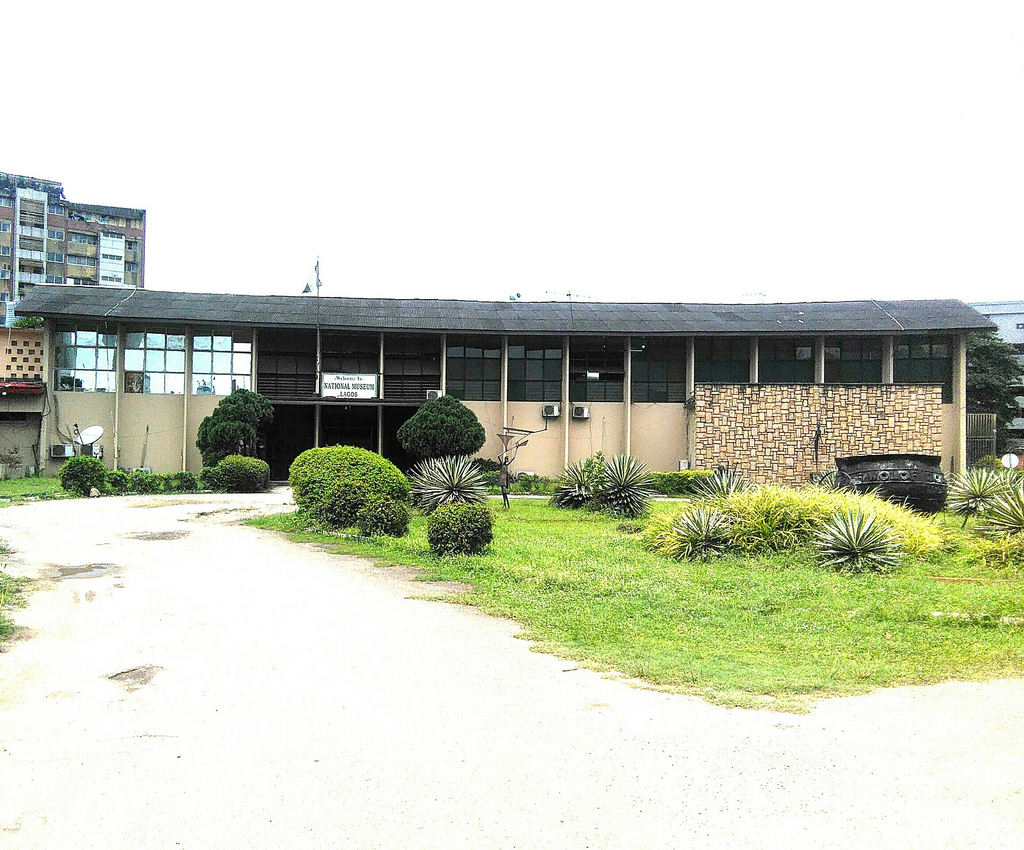
“National Museum at Onikan Lagos.jpg” — Photo by Olusola David, Ayibiowu, licensed under CC BY-SA 4.0.
The National Museum on King George V Road in Onikan holds collections covering Nigerian art, culture, archaeology and history. Its current archive lists galleries covering cultural heritage, Nigerian art in the cycle of life, and Nigerian government history. The museum is managed by the National Commission for Museums and Monuments, which currently lists opening hours from Monday to Saturday, 9am to 4pm, and Sunday, 11am to 4pm.
Allow enough time to actually look through the collections. The Onikan location also makes it easy to combine the visit with nearby attractions.
3. Spend an Afternoon at the J. Randle Centre for Yoruba Culture and History
The J. Randle Centre is one of the newer cultural spaces in Lagos and offers a more contemporary way of engaging with Yoruba history and culture. Located at Onikan Roundabout, the centre presents exhibitions and cultural programming around Yoruba heritage, making it particularly useful for visitors who want more context around the culture of Lagos and southwestern Nigeria.
The centre currently opens Wednesday to Monday from 10am to 6pm and closes on Tuesdays for maintenance. Admission is listed at ₦5,000 for adults, with children below 10 admitted free.
It works particularly well as part of a Lagos Island cultural day.
4. Visit Freedom Park and See Lagos History Reframed
Freedom Park occupies the former site of Broad Street Prison on Lagos Island and has become one of the city’s most recognisable cultural spaces. The former prison grounds now contain gardens, preserved structures, monuments, performance spaces and areas used for music, exhibitions and festivals.
It is also an active events venue, not simply a historical site. The current programme includes live music, cultural festivals, book events and other performances throughout the year, so it is worth checking the calendar before visiting. For visitors who enjoy combining history with an evening out, Freedom Park can easily become more than a daytime attraction.
5. See Nigerian Art at Nike Art Gallery
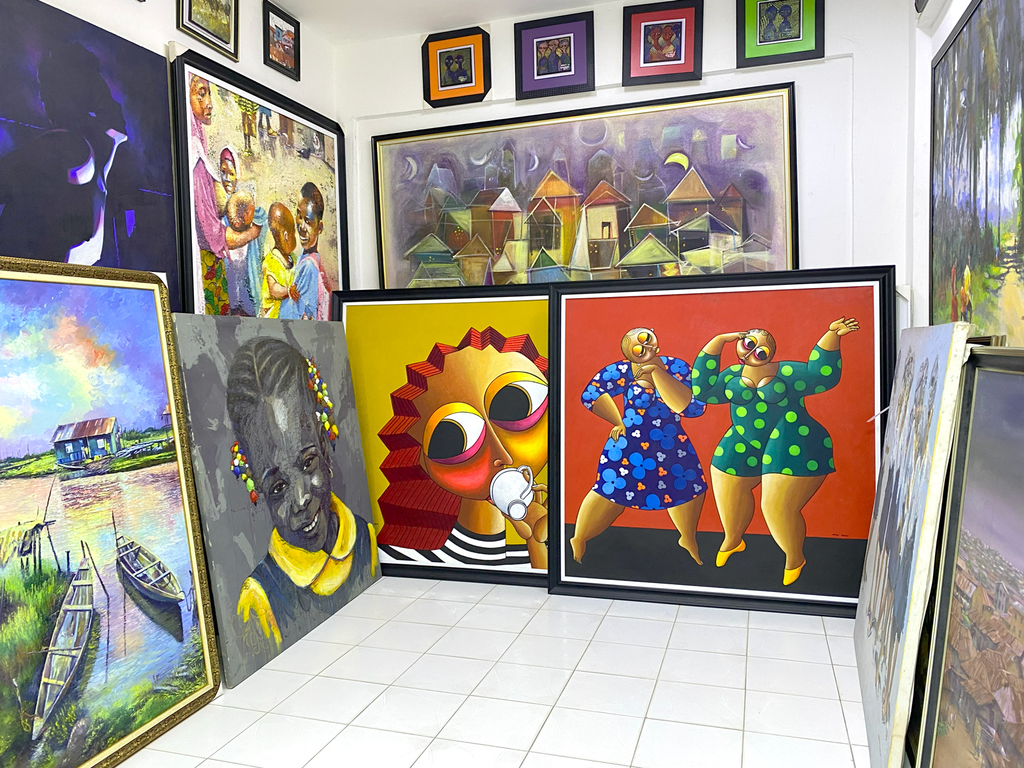
“Lagos Lekki Nike Art Gallery Aug 2026 IMG 6978b.jpg” — Photo by FrankvEck, licensed under CC BY-SA 4.0.
Nike Art Gallery in Lekki is one of the most substantial private art spaces in Lagos, occupying a multi-storey building filled with paintings, sculpture, textiles, beadwork and other forms of Nigerian artistic expression. The collection includes traditional and contemporary work, making the gallery useful for visitors interested in both Nigerian craftsmanship and the country’s modern art scene.
Admission is currently reported as free, and recent 2026 visitor reports also confirm free entry. The gallery is in Lekki Phase 1, making it easy to combine with other eastern-Lagos attractions. Give yourself at least an hour and preferably longer if you want to explore the different floors properly.
6. Explore Contemporary Art at Rele Gallery
Lagos has a serious contemporary art scene, and Rele Gallery in Ikoyi is a good place to see what is happening beyond the larger cultural institutions. The gallery works with emerging and established artists from Africa and the wider Global South and maintains a changing exhibition programme.
Rele’s Lagos space is at 32 Thompson Avenue, Ikoyi, and currently opens Tuesday to Saturday from 11am to 6pm. Its 2026 programme has included exhibitions by artists such as Ameh Egwuh, Praise Sanni-Adeniyi and others. The advantage of visiting a gallery like Rele is that the exhibition changes, so the experience can be very different from one trip to Lagos to another.
7. Eat Nigerian Food at Terra Kulture
Terra Kulture in Victoria Island is one of the few places where food, art, theatre and Nigerian cultural programming sit under the same roof. Its restaurant serves Nigerian and continental dishes, while the wider venue hosts exhibitions, live performances, theatre productions and cultural events.
The current restaurant operates daily from 9am to 10pm, and its menu includes dishes such as seafood okro, mixed grills and Terra Africana. Recent programming has also included Ìpàdé Àbùlà, centred on àmàlà, gbegiri, ewedu and assorted meats. This is a particularly good option when you want a meal to be part of a larger cultural outing.
8. Watch a Live Performance at the National Theatre
The National Theatre in Iganmu remains one of Lagos’s major performing-arts institutions and hosts theatre, festivals, cultural performances and other events throughout the year. Its current programme includes events such as the Contemporary Circus Festival, Queen Idia and the National Theatre Festival of Unity later in 2026.
Check the current programme before making the trip, since the value of visiting depends heavily on what is scheduled. The theatre is in Surulere at Iganmu and is accessible from the Costain area. For anyone interested in Nigerian theatre, dance, music or live performance, this belongs on the list.
9. Walk Through the Lekki Conservation Centre
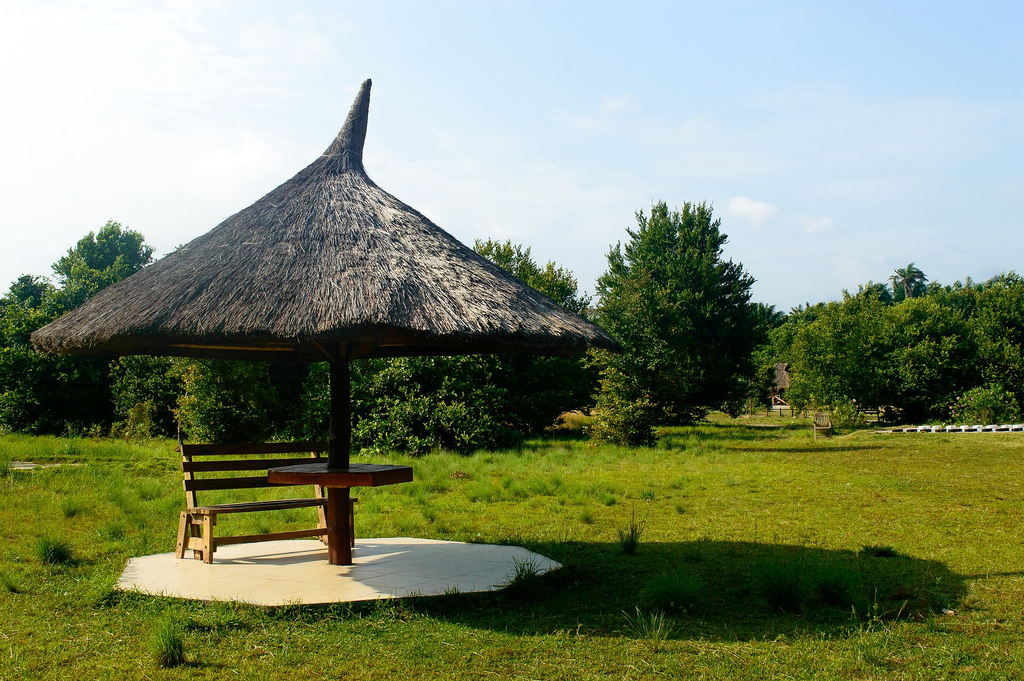
“Lekki Conservation Center.jpg” — Photo by Turizimpressions, licensed under CC BY-SA 4.0.
The Lekki Conservation Centre gives you a completely different Lagos experience. The Nigerian Conservation Foundation established the centre in 1990, and the protected area now covers 78 hectares of coastal vegetation and wetland habitat in Lekki.
The centre is known for its canopy walkway, which the NCF describes as the longest in Africa. Its 401-metre walkway rises above the forest and provides an elevated view of the surrounding vegetation, while the wider reserve supports native wildlife and birdlife.
It is one of the most worthwhile outdoor Lagos activities for families, photographers and anyone who wants an hour or two away from the city’s dense built-up areas.
10. Visit the Kalakuta Museum
The Kalakuta Museum in Ikeja occupies the former home associated with Fela Anikulapo-Kuti and preserves objects connected to his life, music and activism. The museum’s own site describes collections of musical instruments, albums, photographs, personal belongings and other memorabilia from his career.
The address is 7 Gbemisola Street in Allen, Ikeja, and the property also contains accommodation, a bar and kitchen, making it possible to spend more time around the site than a conventional museum visit. This is an essential stop for visitors interested in Fela’s contribution to Nigerian music and the history surrounding Afrobeat.
11. Spend an Evening at the New Afrika Shrine
The New Afrika Shrine in Ikeja is closely connected to the Kuti family’s musical legacy and remains one of Lagos’s most distinctive live-music venues. It is an open-air entertainment space used for concerts, cultural programmes and events associated with Fela Kuti’s legacy.
The venue becomes particularly significant around Felabration, the annual festival celebrating Fela’s life and music. The 2026 festival programme is scheduled around October, with auditions and related activities already taking place in September.
You do not need to wait for Felabration to experience the Shrine, though. Check the venue’s current programme and plan an evening around a live performance. For more evening suggestions, our Lagos nightlife guide covers the city’s wider selection of bars, live-music venues and night-time districts.
12. Shop for Fabrics and Fashion at Balogun Market
Balogun Market on Lagos Island is worth visiting for travellers interested in Nigerian fabrics, clothing, shoes, bags and the commercial side of Lagos fashion. It spreads across numerous streets rather than operating as one enclosed shopping centre, so the experience is closer to exploring a working trading district than visiting a conventional mall.
This is a place to go with a specific interest in what you want to buy. Ankara, lace, ready-to-wear clothing, shoes and accessories are among the goods for which the market is known. The market is busiest during trading hours, and visitors should give themselves enough time to move around rather than expecting a quick shop.
13. Spend Time at a Lagos Beach
Lagos’s coastline provides one of the easiest ways to change the rhythm of a city trip. Beach experiences vary considerably, so you shouldn’t treat every beach in Lagos with the same approach.
Tarkwa Bay is reached by boat and has a more secluded setting, with the crossing forming part of the experience. Current 2026 visitor information continues to describe it as a boat-access beach popular for swimming and relaxed coastal days.
For a more organised resort-style day, La Campagne Tropicana in Ibeju-Lekki combines beach, lagoon and mangrove environments. Its current daycation package includes access to swimming, horse riding, beach games and other activities, with day visits listed from 8am to 6pm. For more options, see our dedicated guide to Lagos beaches.
14. Take a Daycation at La Campagne Tropicana
La Campagne deserves its own entry since it offers considerably more than a few hours on the beach. The resort sits in the Ibeju-Lekki area and combines a beachfront environment with lagoon and mangrove settings.
The current daycation package is listed at ₦10,000 per adult and includes access to the beach, swimming, horse riding, board games, lawn and table tennis, volleyball, beach football and other land activities. The resort also offers boat cruises and water activities separately.
This makes it a useful full-day option for couples, families or groups who want a single outing that combines several different activities.
15. Explore Landmark Lagos and the Upside-Down House
Landmark Lagos in Oniru has evolved into a mixed leisure and entertainment destination, with restaurants, retail, family attractions and recreational activities concentrated in one development. One of its most distinctive attractions is the Landmark Upside-Down House, an inverted architectural installation in which the building and interior furnishings are turned upside down.
Landmark also lists a Kids’ Club, wall climbing, archery and other leisure experiences alongside its dining and hospitality options.
One important update for anyone researching older Lagos travel content: Landmark Beach is no longer operational. The wider Landmark development remains active, so the destination is still useful for entertainment, dining and other experiences, but old articles describing Landmark Beach as an operating beach should not be relied upon.
16. Spend a Family Day at Omu Resort
This is one of the better Lagos activities for families who want several activities in one outing. Omu Resort in Bogije, Ibeju-Lekki, is designed around entertainment, education and nature, making it one of the more comprehensive family-oriented outings around Lagos. Its current attraction list includes an amusement park, zoo, antique museum, horse riding, archery, mini golf, go-karting, kayaking, a water slide and other activities.
The resort currently operates Monday to Saturday from 9am to 6pm and Sunday from noon to 6pm. Individual activities have their own prices, including kayaking, skating and go-karting, while admission packages vary according to which attractions they include.
17. Watch a Film at Silverbird Galleria
A Lagos itinerary does not need to be packed entirely with museums and outdoor excursions. Watching a film at Silverbird Galleria in Victoria Island is an easy way to experience one of the city’s entertainment centres, particularly when there is a Nigerian film you want to see in its local market.
Silverbird’s current Galleria branch is at 133 Ahmadu Bello Way and operates its box office seven days a week. Its September 2026 programme includes Nigerian productions alongside international releases. This is also useful on an evening when you want something relaxed before dinner or after spending the afternoon around Victoria Island.
18. Browse Lagos’s Contemporary Gallery Scene
For visitors who have time for more than one gallery, spend an afternoon exploring several of the city’s smaller art spaces. Rele Gallery in Ikoyi is one option, while Red Door Gallery on Bishop Oluwole Street in Victoria Island offers exhibitions and services ranging from artist representation to restoration, valuation and collection documentation.
The advantage of doing this as a gallery-hopping day is the variety. Lagos’s private galleries are not all trying to tell the same story, and programmes change throughout the year. Current 2026 listings show exhibitions and art events taking place across Ikoyi, Victoria Island and other parts of Lagos. Art lovers should also look at ART X Lagos, which returns from 5–8 November 2026.
19. Make the Trip to Badagry for a Deeper Historical Experience
Badagry is farther from central Lagos, but it offers a completely different historical experience. The Badagry Local Government currently identifies the Badagry Heritage Museum, Mobee Family Museum, Slave Route and Point of No Return among the area’s historical sites.
The Badagry Heritage Museum occupies a former British District Officer’s building constructed in 1863 and converted into a museum in 2002. The local government currently lists the museum’s opening hours as Monday to Friday, 8am to 4pm. This is one of the places to visit in Lagos that requires more time and planning, but it adds historical depth that you will not get from a conventional city sightseeing day.
20. Have a Proper Lagos Food Experience
One of the easiest mistakes visitors make is treating Nigerian food as a single meal to sample once. Food deserves an outing of its own in Lagos, and the city gives you several ways to do it.
Try a properly prepared plate of jollof rice, fried rice, pepper soup, amala, ewedu, gbegiri, ofada rice or suya, then move on to seafood or contemporary Nigerian cooking in one of the city’s restaurants. Terra Kulture is one structured option, while local restaurants, bukaterias and food spots across the mainland and Island provide a much wider range. Terra Kulture’s current menu alone includes Nigerian dishes alongside continental options, and its food programming has recently included dedicated experiences around amala and other Yoruba favourites.
A food-focused day is one of the best ways to understand how Lagos combines Yoruba, Nigerian and wider West African influences through what people actually eat.
How to Build Your Lagos Activities Around Your Trip
You do not need to fit all twenty experiences into one visit. A first-time visitor with three days could dedicate one day to Lagos Island’s museums, heritage and markets, another to Lekki’s art, conservation and leisure attractions, and another to food, the beach and an evening performance.
With five days, it becomes easier to reach farther parts of Lagos and include Badagry, Omu Resort or La Campagne Tropicana. The city also has a strong calendar of temporary cultural events, so a trip planned around an exhibition, theatre production or major festival can look very different from an ordinary sightseeing itinerary.
The key is to group things to do in Lagos geographically. The distance between two points can look modest on a map while taking considerably longer at busy times, so building each day around one part of the city gives you more time actually experiencing the destination.
When Is the Best Time to Explore Lagos?
Lagos is a year-round city, but the type of Lagos activities you choose can make certain periods more convenient. The drier months generally make beach and outdoor outings easier, while the city’s indoor attractions, restaurants, galleries and theatres remain useful throughout the year.
December is particularly active for entertainment, concerts and social events, while the later part of the year also brings major cultural programming. ART X Lagos is scheduled for November 5–8, 2026, and the Lagos Biennial’s fifth edition is scheduled for later in November and December.
It is worth checking individual event calendars close to your travel dates, especially for theatre, music and temporary exhibitions.
Final Thoughts
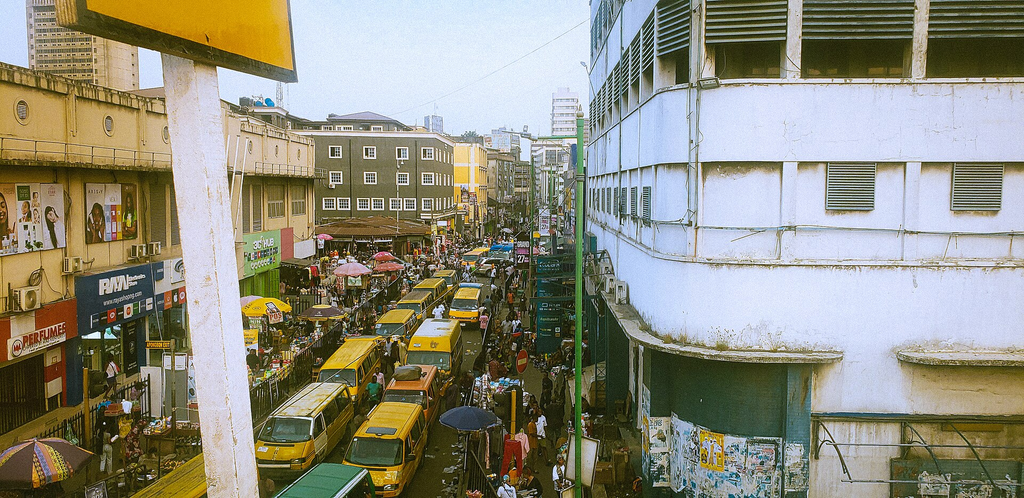
“BALOGUN MARKET.jpg” — Photo by Judah Creates, licensed under CC BY-SA 4.0.
The best things to do in Lagos are spread across several very different versions of the city. You can spend the morning learning about Nigerian history on Lagos Island, move into contemporary art in Ikoyi, head towards Lekki for conservation and the beach, explore Fela’s legacy in Ikeja and finish the day with theatre, live music or dinner.
That variety is what makes Lagos such an interesting destination to explore. Its Lagos attractions are not limited to monuments or purpose-built tourist sites; some of the most memorable experiences come from food, art, music, markets and the ordinary places where the city’s culture continues to develop.
For a broader introduction to planning your trip, continue with our Lagos travel guide, then explore our dedicated guides to Lagos nightlife and Lagos beaches for more specific experiences.
Have a splendid trip!