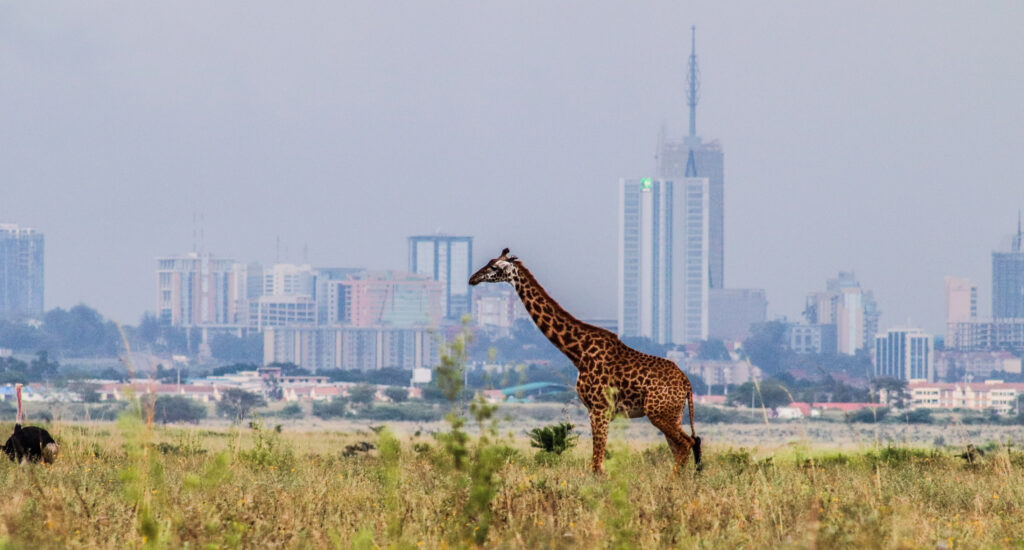
“A giraffe with a beautiful background of Nairobi City Skyline.jpg” — Photo by Alexmbogo, licensed under CC BY-SA 4.0.
There is something wonderfully unusual about Nairobi: you can wake up in a modern African city, have breakfast in a café, spend the morning looking at giraffes, walk through a forest in the afternoon and finish the day with dinner and live music, all within the same city. Hence, I see Nairobi as such an interesting place to begin a trip through Kenya.
For many visitors, Nairobi is simply the place where the plane lands before the safari begins. I understand the logic, especially when you have been dreaming about the Maasai Mara for years, but I think the city deserves a little more attention. Nairobi has its own character, its own food culture, its own creative scene and its own collection of stories, and once you give yourself time to explore it, the city becomes part of the Kenyan experience rather than a stop on the way to somewhere else.
This Nairobi travel guide is for a first visit, so I want to cover the things that actually help you understand the city: where the main neighbourhoods are, what each one feels like, what you can do during the day, where the wildlife fits in, what Nairobi tastes like, how people move around, what the nights are like, how much you should budget and which day trips are worth making. So, if you are visiting Nairobi for the first time, settle in properly. There is plenty to discover.
What is Nairobi like?
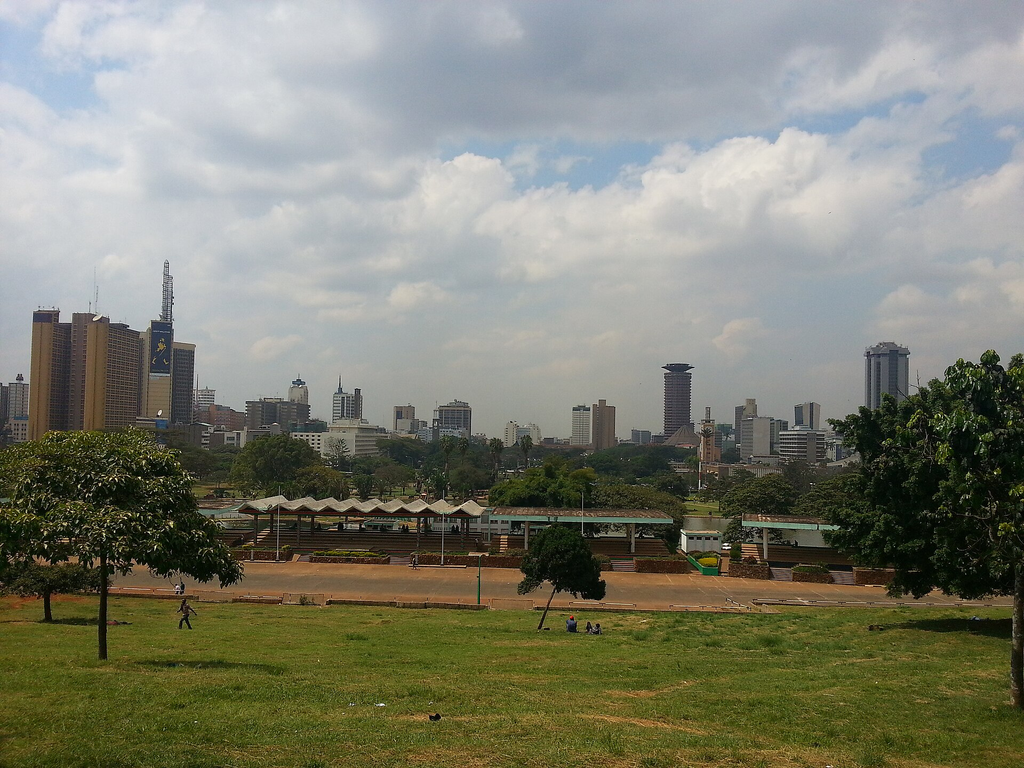
“Nairobi City Skyline.jpg” — Photo by Raidarmax, licensed under CC BY-SA 3.0.
Nairobi is the country’s main tourism and transport hub. It is a combination of urban culture, business, food, heritage and wildlife, with attractions ranging from Nairobi National Park and the Giraffe Centre to the Nairobi National Museum, Railway Museum, markets and cultural spaces.
Nairobi is Kenya’s capital and one of East Africa’s major cities, with a population, economy and influence that reach well beyond its administrative boundaries. The city has a fascinating mixture of built-up commercial districts, leafy residential areas, older neighbourhoods, universities, shopping centres, creative spaces and large areas of greenery. The contrast can be striking. One part of the city may feel intensely urban, while another has trees, gardens and quiet roads that make you forget you are still in a major capital.
The city’s history is also relatively young compared with some of Kenya’s older settlements. Nairobi grew around the railway at the end of the nineteenth century, and that connection remains part of its identity. The Nairobi Railway Museum preserves locomotives, railway equipment and stories from the construction and operation of the Kenya-Uganda Railway, giving visitors a glimpse into one of the forces that helped shape the city itself.
There is another defining feature that makes Nairobi particularly special: wildlife. Nairobi National Park begins only about 10 kilometres from the Central Business District, making Nairobi one of the rare places in the world where a major city and a genuine wildlife ecosystem exist side by side. Kenya Wildlife Service describes it as the world’s only wildlife capital, with lions, rhinos, giraffes, buffaloes, more than 400 bird species and a variety of other wildlife within its 117-square-kilometre park.
Nairobi neighbourhoods: where should you spend your time?
One thing I would decide early is where I actually want to stay. Nairobi is spread across several distinct areas, and choosing a neighbourhood based on what you plan to do will make a noticeable difference to the experience.
Westlands
Westlands is one of the city’s most popular areas for restaurants, shopping, business and nightlife. It has a strong modern-city feel, with hotels, offices, apartment buildings, restaurants, rooftop venues and shopping centres concentrated around places such as Westgate, Sarit and the wider Parklands area.
This is one of the easiest neighbourhoods for visitors who want plenty happening around them, especially in the evenings. Current Nairobi tourism listings describe Westlands as a mixed-use district for work, dining, shopping and nightlife, while its current nightlife listings include venues such as The Alchemist, Nairobi Street Kitchen, Sarabi Rooftop Bar and other evening destinations.
Kilimani
Kilimani has become particularly popular with young professionals, long-term visitors and people looking for modern apartments, cafés and restaurants.
The neighbourhood has a large supply of serviced apartments and boutique accommodation, and there is plenty of food and nightlife around areas such as Yaya Centre and Hurlingham. It is also a useful middle ground if you want access to several parts of the city.
Karen
Karen is completely different. It is greener, more spread out and strongly associated with gardens, conservation, heritage attractions and larger residential properties. The area takes its name from Karen Blixen, whose former home is now the Karen Blixen Museum. Karen is particularly appealing for visitors who like space, nature and a slower pace, and it works very well for combining several attractions in the same part of the city.
Gigiri
Gigiri is Nairobi’s diplomatic and international district, home to the United Nations complex and numerous embassies. The area has a polished, quiet feel and is also close to Village Market, one of Nairobi’s major shopping and dining destinations. For travellers staying in this part of the city, the neighbourhood offers a different side of Nairobi, particularly when you want a comfortable base with restaurants and green surroundings.
Lavington
Lavington is another leafy residential area with cafés, restaurants and shopping centres. I would consider it for a quieter stay that still gives you reasonable access to central Nairobi, Westlands and Kilimani.
Parklands
Parklands has a strong community atmosphere and is especially known for its Indian and South Asian cultural influence, restaurants and businesses. It is also close to Westlands, making it convenient for visitors who want access to the entertainment and shopping options there.
Nairobi CBD
The Central Business District is the historic commercial core of the city. This is where you will find major government buildings, Kenyatta Avenue, City Market, historic landmarks, the National Archives and several important institutions. I would spend time here even if I did not stay here, because the CBD tells a different part of Nairobi’s story from the newer residential and entertainment districts.
Eastlands
Eastlands is a huge and diverse part of Nairobi, and it would be impossible to describe it with one simple label. The area has strong music, food, business and sporting cultures and is home to millions of everyday Nairobi residents. For a first-time visitor, I would explore specific places through people who know the area well rather than trying to treat Eastlands as one tourist district.
Arriving in Nairobi
Most international visitors arrive through Jomo Kenyatta International Airport (JKIA), while Wilson Airport is heavily used for domestic and safari flights. That distinction becomes useful once you start planning a safari because many flights to national parks leave from Wilson rather than JKIA.
Your airport transfer will depend largely on where you are staying. Westlands, Karen, Gigiri and Kilimani are all in different directions from the airport, so I would arrange transportation based on your accommodation.
Getting around Nairobi

“Matatu in Nairobi – Kenya’s Colorful Transport.jpg” — Photo by Tmaokisa, licensed under CC BY-SA 4.0.
There are several ways to move around Nairobi, and the best option depends on where you are going.
Ride-hailing apps are probably the most straightforward choice for most first-time visitors. They are especially useful when you are moving between neighbourhoods, restaurants, attractions or your hotel.
You will also encounter ordinary taxis and matatus, the shared minibuses that make up a large part of Nairobi’s public transport system. The matatu culture is worth experiencing visually even if you do not use one regularly. Some are brightly painted; some have elaborate sound systems and many have become part of Kenyan pop culture in their own right.
Then there are boda bodas, the motorcycle taxis found across Nairobi and other parts of Kenya. For shorter journeys, they can be useful, although I would choose the transport option that fits the road, traffic and journey.
Walking is also pleasant in selected neighbourhoods. Karen, parts of Westlands, the CBD around certain attractions and some residential areas have sections that work well on foot, although Nairobi is too large for walking to be your main transport method.
One of my practical Nairobi travel tips is to think in terms of neighbourhoods when planning a day. Put your nearby attractions together and give yourself enough time to get between districts.
Nairobi’s greatest attraction: wildlife in the city
I think this deserves to be said plainly: book the safari!
Nairobi National Park is not a substitute for the Maasai Mara, Amboseli or Tsavo, but it offers something none of those destinations can: the experience of seeing wild animals with Nairobi’s skyline in the background.
The park was gazetted in 1946 and became Kenya’s first national park. Today, it covers 117 square kilometres and supports more than 100 animal species, including black rhinos, lions, giraffes, buffaloes and other wildlife, alongside more than 400 bird species. This makes an early-morning game drive an excellent way to spend one of your Nairobi days.
You can also visit the Nairobi Safari Walk, which Kenya Wildlife Service describes as an immersive experience across simulated wetland, savannah and forest habitats, with animals including rhinos, lions, leopards, buffaloes, giraffes and zebras.
For visitors with more time, the Giraffe Centre in Lang’ata is another popular wildlife experience. It is home to the Rothschild’s giraffe and combines close encounters with conservation education. The centre’s current published admission for non-resident adults is KSh1,500, and it is open from 9 a.m. to 5 p.m. daily. This is one of those places where you can learn about conservation and still have a genuinely fun afternoon.
Nairobi’s culture and history
Wildlife may bring you here, but Nairobi has plenty to say about Kenya’s history.
Nairobi National Museum
The National Museum is one of my first recommendations for a visitor who wants to understand Kenya beyond safari. The museum was established in the early twentieth century and moved to its current Museum Hill location in 1930. Today, it brings together collections covering Kenyan history, culture, art and natural history. The museum complex also includes the Snake Park and botanical gardens, so it can occupy a substantial part of an afternoon.
Karen Blixen Museum
The Karen Blixen Museum offers another kind of historical experience. The house was built in 1912 and became Blixen’s farmhouse in 1917. It remained her home until she left Kenya in 1931, and it later became a museum after the renewed international attention surrounding the film Out of Africa.
The gardens, nature trail and views of the Ngong Hills add to the appeal. You can easily combine Karen Blixen Museum with other Karen attractions and make an entire day of the area.
Nairobi Railway Museum
The Railway Museum is particularly interesting if you want to understand the role transportation played in the city’s development. Historical locomotives and railway artefacts tell a story that reaches back to the early years of colonial railway construction, while the museum’s location near the city centre makes it easy to combine with downtown sightseeing.
Nairobi Gallery
For art and culture in the heart of the city, Nairobi Gallery is another option worth considering. The gallery occupies the historic building once known as the Old PC’s office and hosts exhibitions around Kenyan art and culture.
Nairobi National Archives
The National Archives in the CBD provides another window into Kenya’s political, historical and cultural past, with documents, photographs and artefacts connected to the country’s history. For someone interested in photography or history, the combination of Archives, City Market and the older parts of the CBD can make a very interesting day.
Karura Forest: Nairobi’s green side
Nairobi has a lot of trees.
I think that sometimes surprises visitors because their first image of the city is usually skyscrapers and busy roads. Karura Forest is one of the best places to experience that greener side.
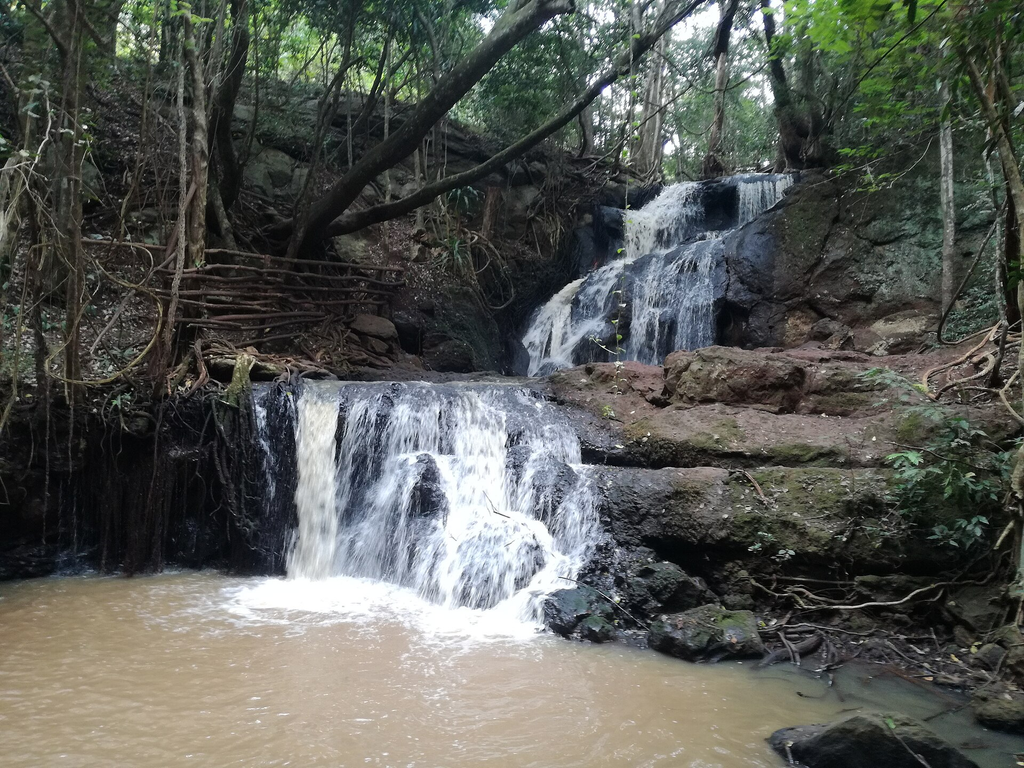
Managed by the Kenya Forest Service, Karura covers a large urban forest landscape with marked walking trails, waterfalls, rivers, picnic areas, wetlands and caves. Visitors can walk, cycle, run, birdwatch or simply spend time outdoors.
The forest also has a strong historical connection with the late environmentalist Wangari Maathai, whose work helped protect parts of Karura from development.
I would give yourself several hours here. There is enough to explore that you do not need to rush through it.
Food in Nairobi
Nairobi’s food scene is one of the things I would leave room for.
The city has everything from small local eateries to contemporary African restaurants, international restaurants, cafés, bakeries, Indian restaurants, Ethiopian restaurants, seafood spots and excellent coffee shops.
For a genuinely Kenyan introduction, start with nyama choma, ugali and sukuma wiki.
Nyama choma is grilled meat and one of Kenya’s most popular social foods. Ugali is a firm maize-meal staple, while sukuma wiki is a leafy vegetable dish that often accompanies meat or fish.
You should also try chapati, githeri, mukimo, irio, pilau and Kenyan-style tea.
For breakfast, look out for mandazi, eggs, sausages, chapati and tea, particularly in local cafés and eateries. Nairobi is also becoming an increasingly interesting city for modern African food with Kenyan classics, contemporary African menus, coffee culture and neighbourhood restaurants across the city.
Nairobi nightlife
Nairobi nightlife has developed into a substantial part of the city’s social life.
Westlands is one of the strongest nightlife districts, with restaurants, rooftop bars, live music venues and clubs. Kilimani has its own collection of lounges and bars, while Karen and Lang’ata are better suited to relaxed evening dining and garden settings.
The current Visit Nairobi nightlife directory includes venues such as The Alchemist, Nairobi Street Kitchen, Sarabi Rooftop Bar, Asiatic Rooftop Lounge, Ciel and KODA, giving you a good sense of the range available in the city. One thing I really like about Nairobi nightlife is that you do not have to club until sunrise to enjoy it. You can have a proper dinner. You can listen to live music. You can sit at a rooftop bar. You can go to a cultural event. You can find an outdoor venue with food and music. And, of course, you can go dancing.
Shopping in Nairobi
Nairobi has a very good mixture of modern shopping and Kenyan craft. For malls, you have Westgate, Sarit, Village Market, Two Rivers, Galleria, Garden City and other large retail centres.
For something more local, the Maasai Market is one of the places to look for jewellery, textiles, artwork, carvings and souvenirs. The current Nairobi tourism directory also lists Kazuri Beads in Karen as a Kenyan craft destination, alongside the Maasai Market and several large shopping centres.
Look for kitenge and other African textiles, handmade jewellery, wood carvings, baskets, artwork and locally made products. I particularly like buying things that have some connection to the place I am visiting.
How much does Nairobi cost?
Nairobi works for several budgets. Current crowdsourced figures put an inexpensive restaurant meal at around KSh700–750, a three-course mid-range meal for two around KSh4,500, a cappuccino around KSh320–350, and a local public-transport journey around KSh100, although prices vary considerably across neighbourhoods and businesses.
Accommodation is the bigger variable. Current Booking.com figures put average Nairobi hotel prices around US$76 per night for three-star hotels, US$112 for four-star and US$189 for five-star properties, although your actual rate will depend on the dates, hotel and booking conditions.
A three-day Nairobi itinerary
A three-day Nairobi itinerary gives you enough time to see the major sides of the city.
Day 1: Nairobi culture and history
Start at the Nairobi National Museum, then have lunch around Museum Hill or another nearby neighbourhood before heading into the CBD. Visit the National Archives or Nairobi Gallery, explore part of the city centre and finish the afternoon around a café or restaurant. For dinner, head towards Westlands, Kilimani or another part of the city that suits your evening plans.
Day 2: Wildlife and Karen
Start early with Nairobi National Park. After the game drive, continue towards Lang’ata and visit the Giraffe Centre, then make your way into Karen for lunch and the Karen Blixen Museum. End the day with a relaxed dinner in Karen or head back towards the city for Nairobi nightlife.
Day 3: Karura and the creative city
Spend the morning at Karura Forest, then have lunch before exploring Nairobi’s creative and shopping scene. You could visit Village Market, an art space or a craft market, then spend the evening at a restaurant or rooftop bar. This gives you wildlife, history, nature, food and modern Nairobi in three days.
Nairobi’s language and everyday culture
Kiswahili and English are the country’s official languages, and Nairobi’s everyday conversation often moves naturally between English, Kiswahili and Sheng. You will hear words like sasa, habari, asante, karibu and poa, depending on who you are talking to.
Sheng is particularly associated with urban youth culture and blends elements of Kiswahili, English and other Kenyan languages.
Learning a few words is enough to open conversations, and people will generally appreciate that you made the effort.
Food, sport and music also reveal a lot about the city. You will see football jerseys everywhere, hear conversations about the Premier League and local football, and encounter Kenyan music alongside Afropop, hip-hop, gospel, reggae and international sounds.
Nairobi’s creative scene is particularly strong in music, fashion, photography, film and visual art. For a traveller interested in contemporary African culture, that alone can become an entire trip.
What should you know before visiting Nairobi?
The practical side of entering Kenya deserves its own detailed page, which is why the Nairobi travel requirements section on AdaVentours should eventually sit separately from the city guide.
For visitors, the most important distinction is that Kenya currently operates an Electronic Travel Authorisation system, with eligibility and requirements varying by nationality and travel circumstances. For Nairobi itself, your main planning decisions are accommodation, airport transfers, local transport, activities and the amount of time you want to spend in the city before moving on. The rest is simply deciding what kind of Nairobi you want to experience.
Nairobi at a glance
| What you want | Where I would start |
| First visit | CBD + Westlands + Karen |
| Wildlife | Nairobi National Park |
| Giraffes | Giraffe Centre |
| History | Nairobi National Museum + Railway Museum |
| Karen experience | Karen Blixen Museum + Giraffe Centre |
| Nature | Karura Forest |
| Hiking | Ngong Hills + Mount Longonot |
| Family activities | Giraffe Centre + Nairobi National Park + Karura |
| Shopping | Village Market, Westgate, Sarit, Maasai Market |
| Nightlife | Westlands + Kilimani |
| Kenyan food | Nyama choma, ugali, sukuma wiki, chapati, githeri |
| Coffee | Kilimani, Westlands and other café districts |
| Day trip | Lake Naivasha, Hell’s Gate, Ngong Hills |
| Safari connection | Maasai Mara, Amboseli, Nakuru or other parks via Wilson Airport |
| Quieter stay | Karen, Lavington or Gigiri |
| Central/social stay | Westlands or Kilimani |
| Airport-focused stay | Areas with easy JKIA access, depending on flight timing |
My final Nairobi travel guide advice
“Karura waterfall.jpg” — Photo by Vinniescent, licensed under CC BY-SA 4.0.
I think the best first experience of Nairobi starts with understanding that the city has several worlds inside it. There is the Nairobi of skyscrapers and business meetings, the Nairobi of matatus and cafés, the Nairobi of museums and railway history, the Nairobi of Karen’s gardens and Ngong Hills, the Nairobi of nightlife and rooftop restaurants, and then there is the astonishing fact that you can enter a national park and watch a rhino with the city skyline sitting beyond the grasslands.
That is a lot of Nairobi to fit into one visit. It is a city where wildlife and skyscrapers share the same horizon, where old railway history sits alongside a young creative culture, where you can spend the morning in a museum and the afternoon beneath trees, and where a good meal can become just as memorable as the attraction you travelled across town to see.
That is the Nairobi I would want you to meet. And once you do, I have a feeling you may want to stay a little longer. Have fun!