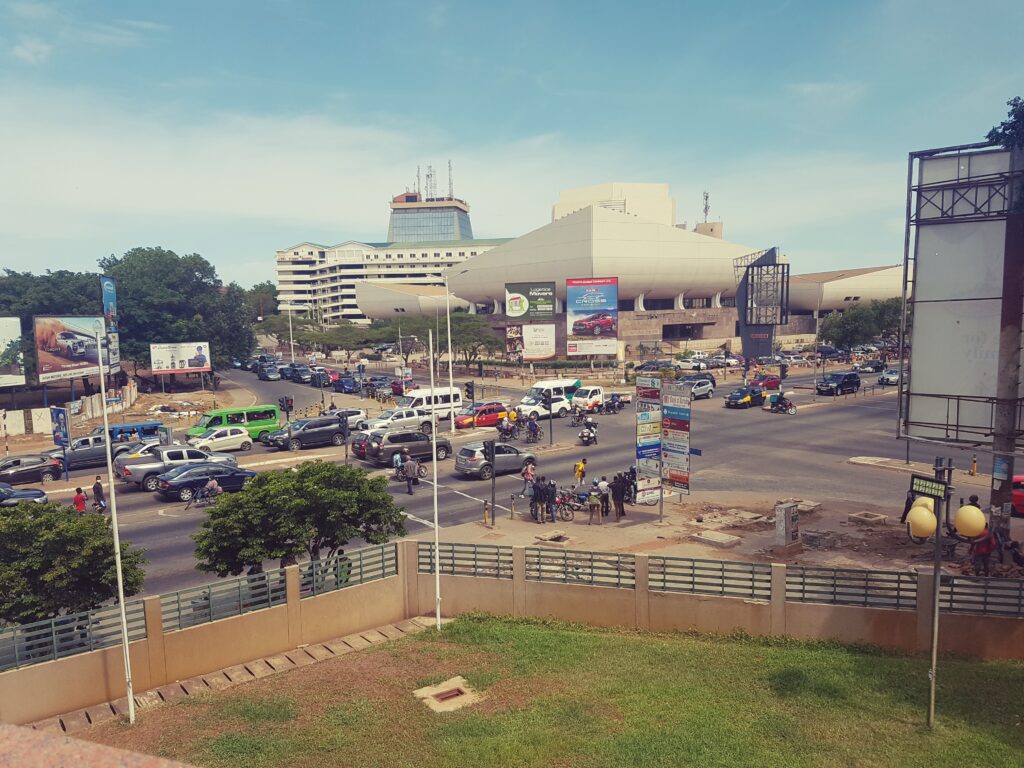
National Theatre of Ghana, Accra. Photo: BoogieMonk / Wikimedia Commons, CC BY-SA 4.0.
There is a welcoming warmness of Accra that cannot be overlooked. Of course, like every other tourist or traveller, you must have had a layout of plans for your trip; activities to carry out. However, for Accra, you can also prepare yourself for a surprise.
The true personality of Accra sits in the spaces between little things: the roadside chop bars, the conversations over sobolo, the sound of music coming from a bar in Osu, the smell of grilled meat on the evening breeze, the trotro squeezing through traffic, the traders at Makola, and the little discoveries you make. It’s all just endless.
That is why I wanted this Accra Travel Guide to explore as much as you possibly can amidst the boundless possibilities. If you are visiting Accra for the first time, give yourself permission to experience all of it. You may be surprised by which version becomes your favourite. That said, let’s dive right into it.
What is Accra actually like?
Accra has been Ghana’s capital since 1877, and Greater Accra sits along the Atlantic coast and the Gulf of Guinea. The city’s official tourism profile describes a place where historic districts sit alongside modern commercial areas, restaurants, hotels, markets, museums and a lively nightlife scene. What you get is a city with several personalities, all operating at the same time.
There is the polished side of Accra around Airport Residential, Cantonments and parts of Labone. We have the creative, social energy of Osu. There is, of course, the history of Jamestown and Usshertown. There is the commercial intensity of Makola. How about the university atmosphere around Legon? Then there are the beaches, suburbs, markets, neighbourhood eateries and everyday streets that make the city feel lived-in rather than staged for visitors.
Accra is a bustling place to be. There is plenty of traffic with busy roads and commercial districts. Yet there is also a relaxed social quality to the city, particularly when you get away from the main roads and settle into a neighbourhood for a while. That range is one of Accra’s biggest strengths.
The Ghana Tourism Authority describes Greater Accra as a destination with heritage attractions, modern commercial areas, affordable and luxury accommodation, beaches, restaurants, bars and nightclubs, while its list of key attractions includes the Kwame Nkrumah Memorial Park, National Museum, Independence Square, the Black Star Gate, the University of Ghana, Legon Botanical Gardens, Makola Market and Jamestown Lighthouse. You will notice something else quite quickly: Accra is a city where old and new sit very close together.
Understanding Accra’s neighbourhoods
I would strongly recommend choosing your accommodation based on where you want to spend most of your time. The neighbourhood you choose will shape your mornings, evenings, restaurant options and how much time you spend in traffic.
Osu
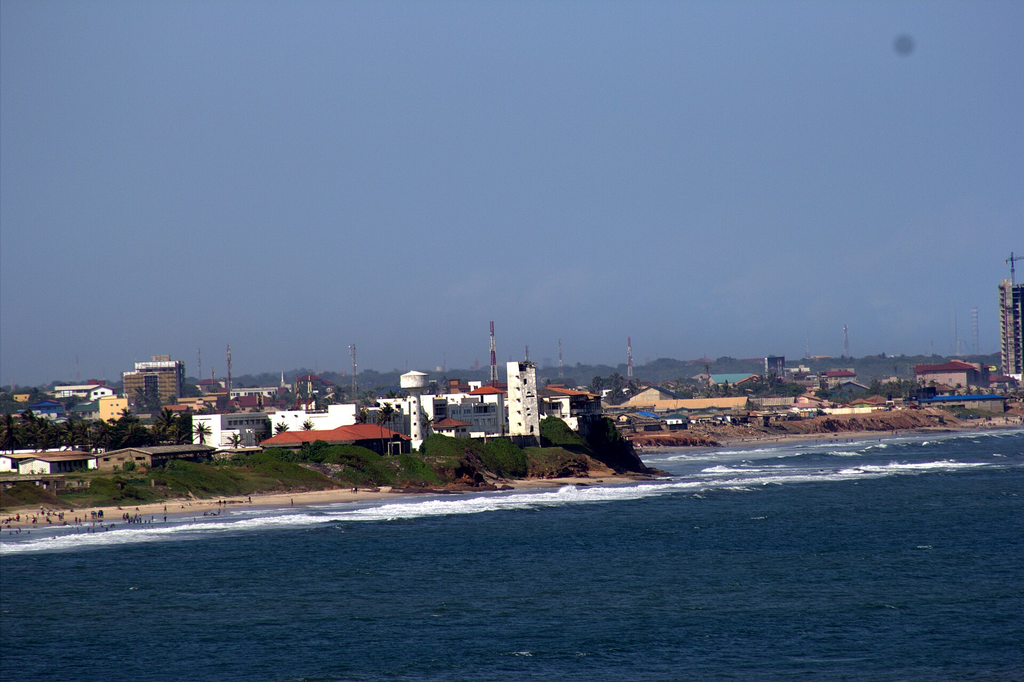
Osu Castle, Accra. Photo: Bright Kwame Ayisi / Wikimedia Commons, CC BY-SA 4.0.
For a first-time visitor, Osu is probably one of the easiest places to understand. Oxford Street and the surrounding roads give you a concentration of restaurants, bars, cafés, shops and nightlife, and there is enough going on.
The area is lively and encourages freedom. It also has history beneath all that modern activity, with older Accra close by and important landmarks within reach. I particularly like Osu for visitors who want to experience the social side of Accra.
Cantonments
Cantonments is a more residential, polished part of Accra and is popular with embassies, professionals, upscale residences, hotels and restaurants. It is a good option if you care about comfort and prefer a quieter base at the end of the day. You are also well positioned for moving towards Osu, Labone, Airport Residential and other central areas, although traffic still has a vote in how long those journeys actually take.
Labone
Labone is one of those places I would recommend to people who enjoy food, cafés and a slightly quieter atmosphere. You can find restaurants and social spaces tucked into otherwise residential streets, which gives the neighbourhood a nice balance between convenience and calm. It also has enough independent character that you do not feel as though you are staying in a generic hotel district.
Airport Residential Area
Airport Residential is practical for business travellers, short stays and people who want to remain close to Kotoka International Airport. The neighbourhood has hotels, restaurants, offices and modern apartments, and it is generally convenient for accessing several other parts of the city. It is not the first place I would pick for someone whose main goal is to feel immersed in old Accra, but for convenience, it makes a lot of sense.
East Legon
East Legon is a major residential and commercial district with plenty of restaurants, cafés, shops and newer developments. It is particularly popular with young professionals and long-term residents, and there is enough hospitality activity to make it a viable base for visitors as well. The main thing to keep in mind is distance. You may enjoy staying here, but if most of your plans are around Jamestown, Osu or central Accra, you will need to factor travel time into your days.
Labadi and the coast
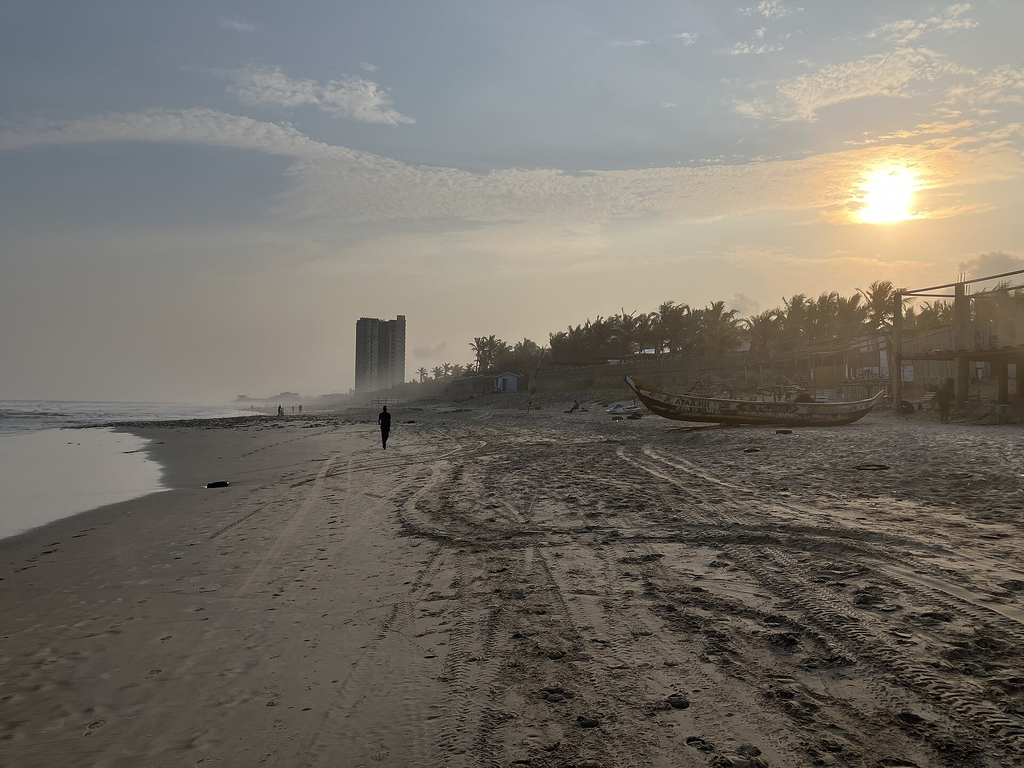
Labadi Beach, Accra. Photo: Afus199620 / Wikimedia Commons, CC0.
This area makes sense for anyone whose idea of a city break involves the ocean. You are closer to Labadi Beach and a number of coastal hospitality options, while still being within reach of central Accra. It is a different experience from staying around Airport Residential or Osu, particularly because the Atlantic is part of the landscape.
Jamestown and Usshertown
Now we are getting into old Accra. The Ghana Tourism Authority specifically highlights Usshertown and Jamestown for their older architecture, the Jamestown Lighthouse, fishing activity and historic character.
This is not where I would necessarily base every first-time visitor, but it is one of the places I would absolutely spend time exploring. Here, Accra feels less polished and more intimate, and you begin to see the city as a place with a long history.
Legon
Around the University of Ghana, the atmosphere changes again. There is a stronger student and academic feel, and Legon Botanical Gardens gives you one of the city’s more unexpected green spaces.
The gardens currently offer activities including a canopy walkway, canoeing, bird watching, cycling, fishing, a playground and high-ropes courses. The published visitor information lists the gardens near Agbogba Junction, around five minutes from the University of Ghana’s main entrance. This is a particularly nice part of Accra to consider when you need a break from buildings and traffic.
Arriving in Accra
For international visitors, your first landing point will usually be Kotoka International Airport. The airport is conveniently located within the city compared with airports that sit much farther outside their destinations, but your final journey time still depends heavily on your hotel location and the traffic when you arrive. Get settled, eat something, have a shower and let Accra introduce itself gradually.
Getting around Accra
For many visitors, ride-hailing services offer the easiest compromise between local movement and convenience. I particularly enjoyed this transport system during my stay in the region. You can see your destination, follow the route and avoid having to figure out the entire public transport system on your first afternoon.
Taxis are also widely available, although I would generally prefer a reputable or prearranged service when I am somewhere I do not know well.
Also, you will hear ‘trotro’ almost immediately, and you will quickly learn that this is the local term commonly used for shared minibuses. A trotro is an important part of everyday Accra life, and using one can be inexpensive and wonderfully local, but the routes are not always intuitive for a first-time visitor. You need to know where you are going and, just as importantly, where you are getting off.
Public transport can be particularly useful when you are trying to keep costs down, and Ghana Tourism Authority information confirms that cards are commonly accepted by major airlines, leading hotels and larger supermarkets, while transport, tipping and other practical travel arrangements remain part of the wider visitor infrastructure.
The real secret to moving around Accra is not finding the fastest vehicle.
Things to do in Accra
There is a lot here, and you will probably need several trips before you can claim to have seen the city properly.
Start at the Kwame Nkrumah Memorial Park
For a first visit, I think this is one of the best places to begin because it gives you context. The Kwame Nkrumah Memorial Park commemorates Ghana’s first president and a major figure in Pan-African history. The current site includes a museum, library, guided tours and the mausoleum where Nkrumah and his wife, Fathia Nkrumah, are buried.
The memorial park is particularly useful early in a trip because you then start seeing later attractions through a better understanding of Ghana’s independence story and Nkrumah’s vision.
The park currently publishes opening hours of 9 a.m. to 7 p.m. Monday to Saturday and 10 a.m. to 7 p.m. on Sunday, with separate entrance fees for Ghanaian and non-Ghanaian visitors. And because it sits close to other central attractions, you can easily combine it with the Arts Centre, Independence Square and Makola rather than spending an entire day travelling between them.
Walk around Independence Square and the Black Star Gate
Ghana’s independence story is impossible to separate from Accra. Independence Square, with the Black Star Gate and surrounding monuments, is one of the city’s most recognisable spaces and remains an important symbol of the country’s independence.
I would not spend hours here, but I would absolutely include it in a first-time itinerary because it gives you a sense of the political and national identity that shapes the city.
Visit the National Museum
The National Museum is another place I would prioritise if you want more than photographs. The Ghana Tourism Authority describes it as the country’s oldest and largest museum, with collections focused on history, culture and heritage.
Museums can sometimes feel like obligations when you are travelling, but this is one of the better situations in which to use one. You get more out of the rest of the city once you understand some of the history behind it.
Spend time at Jamestown
Jamestown is probably the part of Accra I would most strongly advise you to experience with curiosity.
The neighbourhood has fishing communities, old buildings, street life and the famous lighthouse, which has become one of the visual symbols of the area. The current lighthouse structure dates to the 1930s and replaced an earlier lighthouse built in the nineteenth century.
Jamestown is also a place where having a knowledgeable local guide can make a difference because the stories of the streets and buildings are as interesting as the buildings themselves.
Go to the Arts Centre
Located near the Kwame Nkrumah Memorial Park, Accra’s Arts Centre is a good place to look for Ghanaian textiles, clothing, souvenirs, crafts and artwork. This is where you can start thinking seriously about kente, adinkra, beads, carvings and other handmade pieces.
And yes, there may be some negotiation involved. That is part of the experience. The memorial park itself specifically points visitors towards the Arts Centre for crafts and clothing.
Wander through Makola Market
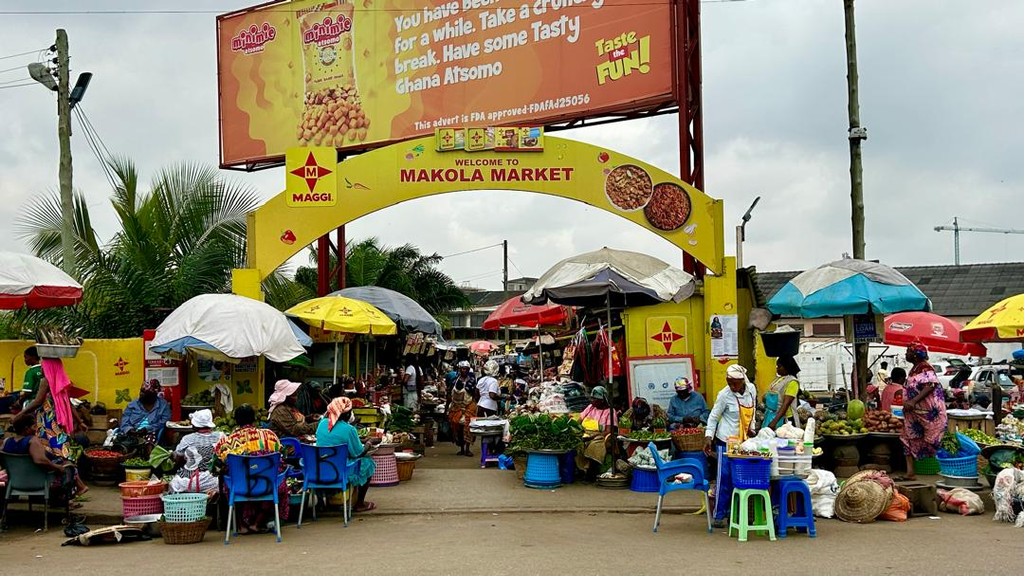
Makola Market, Accra. Photo: Nii Adama Armah / Wikimedia Commons, CC BY-SA 4.0.
Makola is not a theme park built for tourists. It is a real commercial market. The Ghana Tourism Authority describes it as one of Accra’s main markets, and the market’s sheer range is part of its appeal.
You can find food, clothing, footwear, household items and all sorts of everyday goods, and the experience gives you a completely different understanding of the city’s commercial life.
Visit the W.E.B. Du Bois Centre
The W.E.B. Du Bois Centre for Pan-African Culture is an important stop for anyone interested in African and Black global history. The centre includes Du Bois’s former home, a museum, his personal library, the Marcus Garvey Guest House, an open-air theatre and the tombs of Du Bois and his wife, Shirley Graham Du Bois. Du Bois spent the last years of his life in Ghana after accepting Kwame Nkrumah’s invitation to work on the Encyclopaedia Africana project.
This is one of those places where the international significance of Accra becomes particularly obvious. The city was not simply watching Pan-African history happen; it was one of the places where that history was being actively shaped.
Spend a few hours at Legon Botanical Gardens
When I want to escape the concrete without leaving Accra, this is the sort of place I would choose. The gardens currently advertise a canopy walkway, zipline, high-ropes activities, canoeing, bird watching, fishing and cycling, alongside a large children’s play area.
You could make this a family outing, a casual afternoon or an active day depending on what you choose to do. The fact that it is still within the metropolitan area makes it particularly useful.
Visit Accra Zoo
Accra Zoo is another option for families and travellers interested in wildlife without leaving the city. The Ghana Tourism Authority describes the zoo as a small collection of indigenous birds and animals, including lions, elephants and monkeys, and places it within the wider conservation effort.
Explore the National Theatre
The National Theatre is worth considering when there is a performance, cultural programme or event that matches your interests. It forms an important part of Accra’s performing-arts scene, and the Ghana Tourism Authority describes it as a central venue for the city’s cultural life. This is particularly worth checking if you enjoy theatre, dance or live cultural performances rather than sightseeing alone.
Accra’s beaches
The Atlantic is one of the things that makes Accra feel different from a capital city farther inland. Labadi Beach is one of the best-known beaches in the city and remains popular with both residents and visitors. Beyond Labadi, the wider Greater Accra coastline includes places such as Kokrobite, Bojo and other beach destinations, while Ada Foah becomes an attractive option for a longer coastal escape from the capital. Ghana Tourism Authority tourism material specifically highlights La Pleasure, Bojo, Kokrobite and Sankofa to the west of Accra, while describing Ada as a stronger choice for a more extended beach getaway.
I would not treat all of these beaches as interchangeable. Labadi is convenient and lively. Kokrobite has a more laid-back reputation and a stronger alternative beach-culture feel. Bojo offers a resort-style experience with river and coastal scenery. Ada is where I would go when I want the beach to be the reason for the trip rather than simply an activity. That distinction matters when you plan.
What should you eat in Accra?
Now we come to the subject I could probably talk about for much longer than is reasonable. Food is one of the easiest ways to experience Accra since you do not need a formal culinary tour to eat well. You simply need to be willing to try things.
Start with waakye, the rice-and-beans dish that often arrives with a collection of sides such as spaghetti, boiled egg, meat, fish and shito. The combination can look like someone emptied half the kitchen onto one plate, but that is part of the beauty.
Try banku with grilled tilapia and pepper sauce. Try kenkey with fish. Order kelewele, especially when you want something spicy and snackable. Try red-red, made with beans and fried plantain. Have fufu with soup. Look for ampesi and kontomire.
The Ghana Tourism Authority itself describes food as a key part of the Ghana experience and highlights dishes including jollof, kelewele, fufu, waakye and banku with tilapia.
What I especially like about Accra is that you can do both ends of the food spectrum. Lunch can be a straightforward local meal, while dinner might be in a stylish restaurant with contemporary Ghanaian dishes or international cuisine.
Accra nightlife
Accra after dark is a very different experience from Accra in the middle of the afternoon. The city has lounges, bars, clubs, live-music venues, restaurants, beach events and cultural performances, with Osu, Labone, Cantonments and parts of Airport and the wider Island of Accra providing plenty of options.
The Ghana Tourism Authority describes Accra as having a vibrant nightlife built around restaurants, bars and nightclubs, while its dining and entertainment listings continue to add restaurants and nightlife venues across the city.
You do not have to be a serious clubber to enjoy the nightlife. You can have a late dinner, listen to live music, sit outside with friends, go to a cultural event or spend an evening at a quieter garden restaurant.
Shopping in Accra
Shopping here can be as polished or as local as you want. For malls and modern retail, you have places such as Accra Mall, Marina Mall, The Junction and other shopping centres. For something more distinctive, I would look at markets, independent designers, textile stores and craft spaces.
The things I would particularly keep an eye out for are kente, adinkra textiles, beads, handmade jewellery, leather pieces, art, Ghanaian fashion and locally made beauty products. A piece of kente or adinkra is much more interesting when you know the story behind what you’re buying, so feel free to ask questions.
How much does Accra cost?
Accra can be surprisingly flexible. You can build a relatively modest trip around local food, simple accommodation and lower-cost transport, or you can spend heavily on hotels, restaurants, drivers, nightlife and premium experiences.
Current Booking.com listings put the average Accra hotel price at around US$105 per night for a 3-star hotel, US$167 for a 4-star hotel and US$364 for a 5-star hotel, although these are platform averages and your actual price depends on dates, property and availability. The key is that you do not need a luxury budget to have a comfortable Accra trip.
A budget-conscious stay
Choose a modest guesthouse or hotel, eat a good portion of your meals locally, use public transport or shared rides when practical, and focus on experiences that do not require expensive tickets.
A comfortable mid-range trip
This is where I think many visitors will find the sweet spot: a good hotel, regular ride-hailing, a mixture of local restaurants and contemporary dining, cultural attractions, a beach day and a little nightlife.
A luxury trip
Accra can certainly accommodate this too, with five-star hotels, private drivers, high-end restaurants, premium beach clubs and bespoke experiences.
The nice thing is that you can mix the categories. In fact, I would encourage it.
When should you visit Accra?
Accra is warm throughout the year, with rainy periods and drier periods rather than the traditional four-season pattern familiar to many visitors.
The Harmattan can bring dusty, hazy conditions, particularly during the drier months, while December through the early part of the year is popular with travellers because of the relatively dry weather and Accra’s busy social calendar.
December deserves special attention because it can feel like a completely different city. Ghana attracts a large number of diaspora visitors around the end of the year, and Accra’s restaurants, beaches, concerts, parties and cultural events become especially active.
The trade-off is that accommodation and popular experiences can become more competitive. Personally, I think Accra works in several seasons.
Accra at a glance
| What you want from the trip | Where I would start |
| First-time introduction | Osu + central Accra + Jamestown |
| History | Kwame Nkrumah Memorial Park + National Museum + Independence Square |
| Local culture | Jamestown + Makola + Arts Centre |
| Art and creativity | Osu + galleries + W.E.B. Du Bois Centre |
| Food | Waakye, banku, kenkey, kelewele, fufu, red-red |
| Nightlife | Osu, Labone, Cantonments and nearby areas |
| Beach time | Labadi, Kokrobite, Bojo |
| Nature | Legon Botanical Gardens, Shai Hills |
| Weekend escape | Ada Foah |
| Shopping | Arts Centre, Makola and modern malls |
| Budget travel | Local food + modest accommodation + public transport |
| Luxury | Premium hotels + private transport + fine dining |
| Best for | Foodies, couples, families, creatives, culture lovers and first-time West Africa visitors |
Final Accra travel tips I’d actually give a friend
My first Accra travel tip is to choose your neighbourhood carefully. The right hotel can make the city feel easy, while the wrong one can leave you spending far too much time travelling between activities.
I would also group activities together geographically instead of bouncing across the city all day, and I would build at least one slower afternoon into the trip so that you can experience Accra calmly.
Another useful Accra travel tip is to carry some cash alongside your usual payment methods. Cards are widely usable at major airlines, leading hotels and large supermarkets, but everyday travel still benefits from having some local currency available.
Food should also be part of the plan rather than something you fit around sightseeing. Some of the most memorable experiences can happen when you eat somewhere that was recommended by a local rather than somewhere that ranked number one on a generic travel website.
And finally, learn a little local language and have all the fun you need.