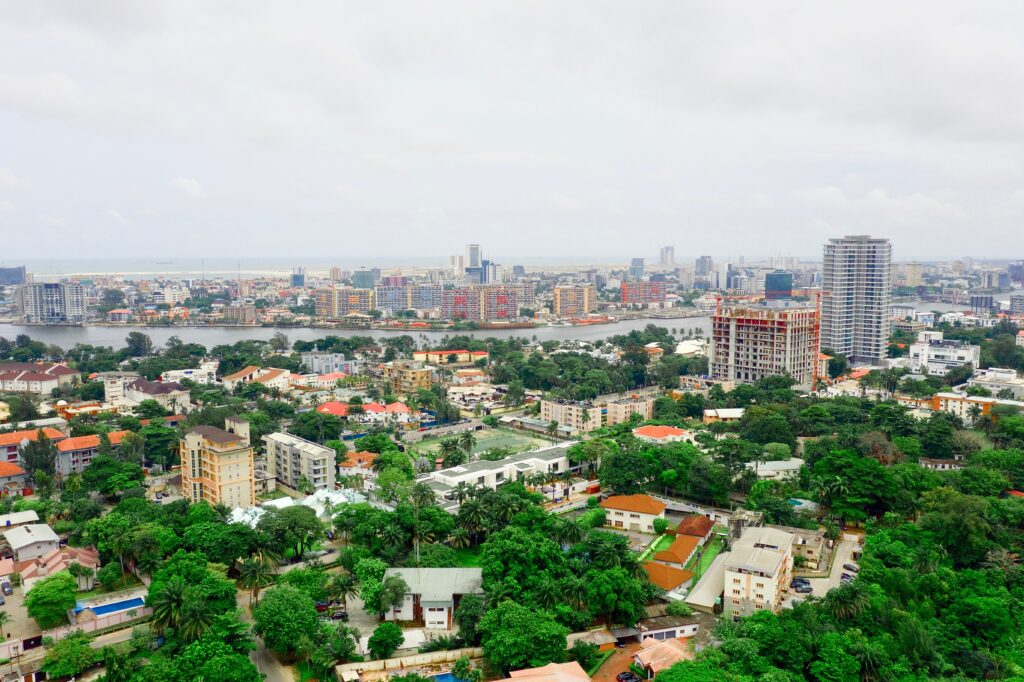
Ikoyi, Lagos. Photo: Reginald Bassey / Wikimedia Commons, CC BY-SA 4.0.
Lagos is very much one of a kind, and if you are planning on visiting Lagos for the first time, you’re in the right place. The city has a special spot in the heart of the country, Nigeria. Even within the same neighbourhood, one street can feel completely different from the next. That variety, among many other features, is part of what makes it so interesting.
This Lagos Travel Guide is therefore not just a list of attractions but your ultimate travel peer. I want you to understand how the city works, what its different neighbourhoods feel like, where the food comes in, how people move around, what to budget for, and, most importantly, what kind of Lagos experience you can create for yourself.
It can all feel chaotic, yet there is a rhythm to it once you align with it. And when you finally do that, Lagos becomes a very different place. Let’s dive into the feel.
First things first: what is Lagos actually like?
Lagos is Nigeria’s largest city and one of its major commercial and cultural centres, but describing it only that way doesn’t really explain the experience of being there. You need to imagine a city shaped by water, trade, migration, business, music, religion, fashion, film, and an enormous appetite for movement.
There is the Lagos Island of old markets and historic streets, the business-heavy atmosphere of Victoria Island, the quieter residential feel of Ikoyi, the rapidly expanding communities around Lekki, the airport-side energy of Ikeja, and the more everyday rhythm of places such as Yaba, Surulere, Maryland, Gbagada, Magodo, Agege, and Alimosho.
Then there are communities and places that tell a very different story about the city, including Badagry to the west, Epe to the east, and places along the coast and lagoon that remind you that Lagos is, at its heart, a waterfront city.
Lagos also has an unusually strong creative personality. Afrobeats, Nollywood, fashion, photography, advertising, contemporary art, and nightlife are all deeply connected to the city. You can go from a gallery to a rooftop bar, from a roadside buka to a beautifully designed restaurant, and then somehow end up at a live music event later that night.
That is one reason Lagos Nigeria tourism has so much potential. There is not one “tourist version” of Lagos waiting for you, so much of the experience comes from understanding how the city lives.
A quick guide to Lagos neighbourhoods
One of the biggest mistakes I see first-time visitors make is treating Lagos as though it were a small city where everywhere is twenty minutes away. Perhaps, such assumptions stem from picturing it on the map.
Fun fact: It actually isn’t. Your choice of neighbourhood will affect your hotel, transport time, restaurants, nightlife, and even the sort of Lagos you experience.
Victoria Island
Victoria Island, usually shortened to VI, is one of the most convenient areas for visitors who want to combine restaurants, business, shopping, nightlife, and modern hotels.
You will find plenty of offices here, along with restaurants, bars, hotels, cafés, and some of the city’s most recognizable high-end establishments. The area is particularly useful if your trip includes business or you want to spend a lot of time exploring the Island side of Lagos.
The waterfront also gives parts of VI a completely different feel from the more crowded commercial areas, especially around the marina and Eko Atlantic corridor. This is the part of Lagos I would recommend to someone who wants convenience and doesn’t mind paying a little more for it.
Ikoyi
Ikoyi feels more residential and leafy in many parts, although it still contains some very expensive homes, hotels, restaurants, and office developments. It is one of the areas I would consider if you want something relatively calm while remaining close to Victoria Island and Lekki.
Places such as Falomo and Dolphin Estate give you a sense of how different the neighbourhoods within Ikoyi can be. The price of staying here can vary significantly depending on the property, so I would choose based on location and purpose.
Lekki
Lekki has become one of the most recognizable parts of modern Lagos, especially for visitors interested in restaurants, cafés, art, shopping, beaches, and nightlife. Lekki Phase 1, Oniru, and surrounding neighbourhoods have become particularly popular with younger professionals and the city’s growing creative and hospitality scene.
The area is also home to destinations such as the Lekki Conservation Centre and Nike Art Gallery, giving you opportunities to move from city life to culture and nature without travelling all the way across Lagos.
Ikeja
Ikeja is a completely different proposition. It is where Murtala Muhammed International Airport is located, and it is also one of the city’s major commercial districts. If you are arriving late, leaving early or spending much of your time around the mainland, Ikeja can be an extremely practical base. Ikeja GRA, in particular, offers restaurants, hotels, and a more residential atmosphere than some of the denser commercial areas.
Yaba
Yaba is one of the places I would mention to anyone interested in Lagos’s technology and creative communities. It is associated with universities, startups, young businesses, and a very active student population, and it has a more everyday Lagos feel than some of the polished hospitality districts farther out on the Island. It is not where I would automatically send someone who wants a luxury holiday, but it is absolutely part of understanding contemporary Lagos.
Surulere
Surulere has a long cultural and sporting history and remains an important part of Lagos life. It offers a more residential, lived-in experience, with restaurants, shops, and local businesses woven into the streets. If you are travelling with someone who wants to experience something beyond the Island’s more upscale districts, Surulere can make an interesting base.
Lagos Island and Marina
This is where I would go when I want to connect modern Lagos with its older identity. The area around Marina, Onikan, and Lagos Island is full of history, commerce, markets, and some of the city’s most recognizable institutions. This is where places like the National Museum Lagos and Freedom Park fit naturally into a day of exploration.
The National Commission for Museums and Monuments lists the National Museum Lagos at Onikan, while Freedom Park describes itself as a historic site and public space developed around the old colonial prison grounds.
Badagry
Badagry deserves a section of its own because it offers a completely different kind of Lagos experience. Located west of the main metropolitan core, Badagry is deeply connected to the history of the transatlantic slave trade and to Nigeria’s broader historical relationship with Christianity and colonialism. The state government continues to promote Badagry as an important cultural-heritage destination, including through the Badagry Heritage Museum and remembrance activities.
Getting to Lagos
For most international visitors, your first encounter with Lagos will be through Murtala Muhammed International Airport in Ikeja. This is worth considering when you book accommodation because the airport is on the mainland, while many of the hotels and attractions you may be interested in are on Lagos Island. That means your first drive can tell you a lot about the city.
Depending on where you are staying and when you arrive, you may cross major bridges, pass through densely built-up areas, and suddenly find yourself surrounded by the glass buildings and luxury developments of the Island.
How do you get around Lagos?
Now we come to one of my favourite parts of explaining Lagos to people because the city has a whole vocabulary for transportation. Yes, you can book a ride through an app. But Lagos also has danfo, BRT, keke napep and, in some situations, okada. Understanding what each means is part of understanding the city.
Danfo
The Danfo is the ubiquitous yellow commercial minibus that moves people around Lagos. It is one of the city’s defining sights, and you will see them everywhere, particularly on the mainland and along major transport corridors.
Taking a danfo can be cheap and very much part of everyday Lagos life, although it isn’t the option I would automatically recommend to a first-time international visitor who is unfamiliar with the routes.
The system is not designed around tourists. Knowing where you are going matters, and knowing the correct bus stop matters even more.
BRT
The Bus Rapid Transit system is a more structured option and forms part of the city’s public transport network. Lagos has been adjusting BRT fares and expanding the wider transport system, so prices should not be treated as permanent. For visitors who want to use public transport, BRT can be much easier to understand than the informal bus network. Its routes and designated stops are more clearly structured.
Keke napep
The three-wheeled keke napep is common in many parts of Lagos, particularly where smaller roads and shorter trips make it useful. It is one of those forms of transport you will probably encounter even if you never intend to use it.
Okada
The motorcycle taxi, or okada, is another familiar part of Lagos transport culture. For someone who has never visited Nigeria, I would not recommend experimenting with okada simply because it looks like the quickest way through traffic. If you’re a bike fanatic, though, you will have the best experience.
Ride-hailing
For many visitors, app-based ride-hailing will be the sweet spot. You get convenience without having to learn every Danfo route. You can also plan journeys between attractions without worrying about negotiating every movement yourself.
The Lagos Blue Line
Lagos now also has an urban rail system that is changing how some people move around the city. LAMATA reported in June 2026 that the Blue Line had increased to 94 daily trips and moved its weekday and Saturday start time to 6:00 a.m., while the Red Line has been undergoing further expansion and regulatory development.
The Blue Line is particularly significant because it gives the city a rail connection across important parts of the Lagos Island–Mainland corridor, making it more than a novelty for visitors who want to try a different way of moving around.
The best things to do in Lagos
There is no way to exhaust Lagos in one article, which is actually a good thing. There are just so many things to do. Here are some of the places and experiences I would put on your radar.
Visit the Lekki Conservation Centre
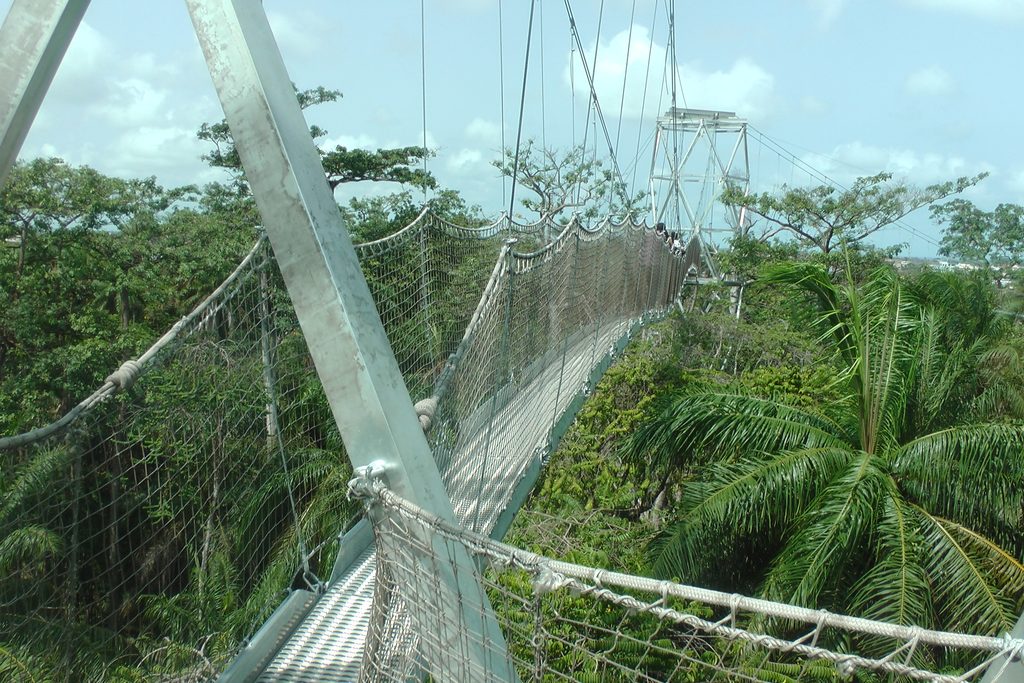
Sights from Lekki Conservation Centre, Lagos Nigeria / Wikimedia Commons, CC BY Ashinze.
If you think Lagos is all concrete, traffic, and buildings, Lekki Conservation Centre will change your mind. The conservation centre, established in 1990, protects a coastal ecosystem containing mangrove forest, wetlands, and savannah vegetation. It is particularly known for its canopy walkway and its role in environmental education and conservation.
Spend time at the Nike Art Gallery
Nigeria’s contemporary art scene is too important to ignore, and Nike Art Gallery is one of the places I would recommend to someone who wants an accessible introduction.
The gallery in Lekki occupies a five-story building and showcases thousands of works connected to Nigerian creativity and artistic traditions, while its founder, Chief Dr. Nike Okundaye, has spent decades working to promote indigenous textile arts, including adire, weaving, and embroidery.
Explore the National Museum Lagos
The National Museum Lagos sits in Onikan and offers a way to place everything else you’re seeing into a much broader Nigerian story. Museums are particularly useful in a city like Lagos because the city changes so rapidly that it is easy to become absorbed in what is happening now and forget the centuries of history underneath it. The museum is managed by the National Commission for Museums and Monuments, which lists the Lagos museum at King George V Road, Onikan.
Walk through Freedom Park
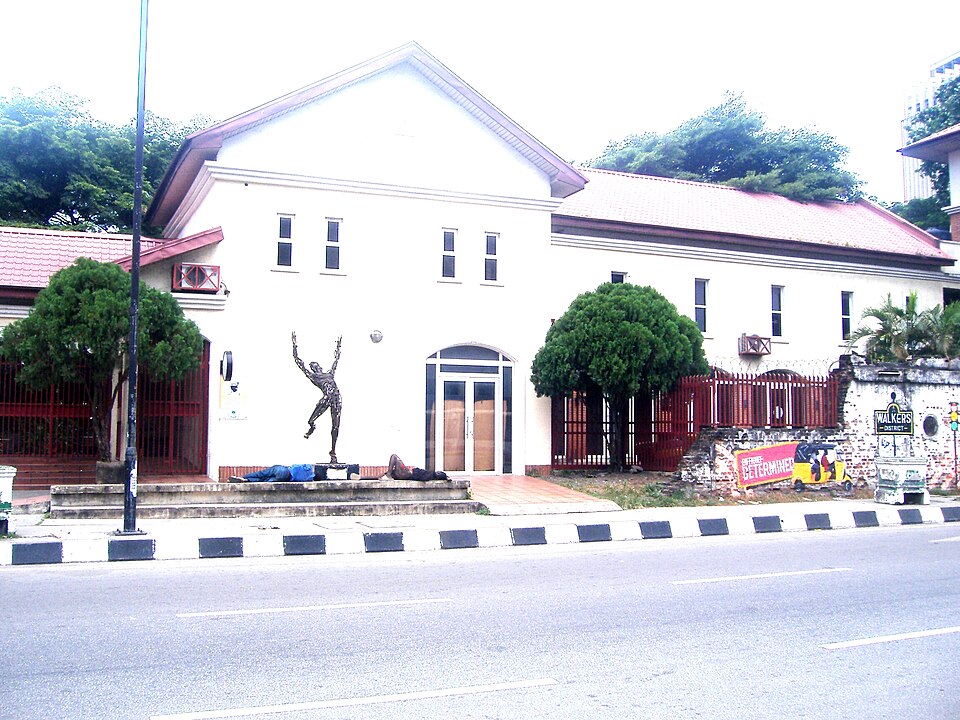
Freedom Park, Lagos Island. Photo: Olusola David Ayibiowu / Wikimedia Commons, CC BY-SA 4.0.
Freedom Park is another place where Lagos history meets contemporary culture. The park occupies the site of the former Broad Street Prison and has been transformed into a public space for art, performance, remembrance, and recreation. Its own history makes it especially interesting because the site carries memories of colonial rule while functioning today as a creative and public gathering space. It is the kind of attraction I like: educative and fun.
See the city from the water
Lagos is surrounded by water, so it would be slightly strange to spend a week here and never experience the city from the lagoon or coast. Boat experiences vary considerably, from private outings to more informal local trips, so the exact arrangement depends on the operator and destination. The important thing is to remember that Lagos looks completely different from the water. The traffic disappears, the towers become part of a skyline, and the coastline stretches out. It’s all so beautiful.
Lagos beaches: yes, you really can have a beach day
This sometimes surprises first-time visitors because the popular image of Lagos is usually roads and skyscrapers. But Lagos has a coastline, and beach culture is part of city life. Some of the names you are likely to hear include Tarkwa Bay, Landmark Beach, Elegushi Beach, and several private beach clubs and resorts along the coast.
The beach experience varies considerably from one location to another. Some are more rustic, some are highly commercialized, while others operate more like full hospitality destinations with food, music, lounges, and organized activities.
Lagos food: come hungry
I could happily write an entire article about Lagos food and still feel like I had barely started. There is the obvious Nigerian food you already know about, and then there is the joy of finding the version you did not know existed.
Lagos also has a serious restaurant scene, so the food experience does not end with local staples. There are modern Nigerian restaurants, pan-African menus, seafood restaurants, cafés, bakeries, rooftop dining, and international cuisine across Victoria Island, Lekki, Ikoyi, Ikeja, and other parts of the city.
Things I would eat in Lagos
If I were helping someone build a food list, I would start with:
- Jollof rice with grilled chicken or fish.
- Suya with onions and pepper.
- Amala, ewedu and gbegiri.
- Ewa agoyin.
- Ofada rice and sauce.
- Pounded yam with soup.
- Moi-moi.
- Akara.
- Pepper soup.
- Grilled seafood by the coast.
- Nigerian pastries and small chops.
- Fresh fruit juices and local drinks such as zobo.
The best part is not finding one “best Nigerian restaurant.” It is trying different styles of food in different parts of the city.
Lagos nightlife: where the city changes personality
There is daytime Lagos, and then there is Lagos after dark. The transformation can be dramatic. Restaurants fill up. Music gets louder. People start dressing for the evening. Traffic changes. And depending on the night, the city can move from a quiet dinner to live music, a lounge, a club, or an all-night party surprisingly quickly.
For first-time visitors, the easiest places to start looking for nightlife are generally around Victoria Island, Lekki, Oniru, and nearby parts of the Island. However, Lagos nightlife is not just clubs. You have live bands, Afrobeat and Afrobeats nights, comedy shows, lounges, rooftop spaces, art events, beach parties, restaurants that become nightlife destinations, and smaller events that may be advertised mainly through Instagram.
During festive periods, especially around December, the city’s entertainment calendar becomes even bigger. You just need to come with an open mind; that is often how you stumble into the most memorable part of a trip. And yes, I would give the dedicated Lagos nightlife guide its own article because there is far too much to fit here.
Shopping in Lagos
You can shop in Lagos at almost any price point. There are luxury malls, independent boutiques, art spaces, markets, street traders, and specialist stores.
For modern shopping, places such as The Palms, Ikeja City Mall, and other major centres offer a predictable environment.
For local fashion and textiles, you can look for ankara, adire, aso-oke, jewellery, leather goods, and handmade crafts.
Markets such as Balogun are a very different experience from a polished shopping mall, and the difference is exactly the point.
How much does a trip to Lagos cost?
This is one of the questions where I want to be realistic rather than give you one magical number. You can visit Lagos on a fairly modest budget, but the city also makes it very easy to spend a lot of money.
Accommodation is the biggest variable. Current Lagos hotel listings range from modest budget properties to very expensive five-star hotels, with Booking.com currently showing average prices of around US$47 for 3-star, US$109 for 4-star, and US$215 for 5-star hotels, although actual prices depend heavily on dates and availability.
Crowdsourced local-price data for Lagos currently puts an inexpensive restaurant meal around ₦5,000 and a mid-range meal for two around ₦68,000, although these figures vary considerably by neighbourhood and establishment. So rather than pretending there is one perfect daily budget, I would think in tiers.
The budget-conscious Lagos trip
You can keep costs down by staying in a modest hotel or guesthouse, eating at local restaurants, using BRT where practical, and choosing low-cost cultural attractions.
A day like this might involve breakfast from a local spot, one or two paid attractions, public transport or a carefully planned ride-hailing trip, and dinner somewhere casual.
The comfortable mid-range trip
This is probably where most visitors will feel happiest. Think of a good hotel, a mixture of local food and restaurants, ride-hailing for convenience, a few paid experiences, a beach day, and some nightlife. You get comfort without necessarily living like a celebrity.
The luxury Lagos trip
This is where the city becomes very expensive very quickly. Five-star hotels, premium restaurants, private drivers, beach clubs, high-end nightlife, and private experiences can push your daily spending considerably higher. The good thing is that you can mix the levels.
There is no rule saying that because you booked a beautiful hotel, you have to eat every meal there. Personally, I would rather spend my money on experiences.
When is the best time to visit Lagos?
Lagos has a tropical climate with distinct wetter and drier periods, and the weather can influence everything from beach plans to traffic and outdoor activities.
The Nigerian Meteorological Agency’s 2026 seasonal climate prediction specifically indicates that Lagos is among the areas expected to experience a longer rainy season than normal this year, illustrating why it is better to think in terms of seasonal patterns and actual dates rather than treating every year as identical.
In practical terms, many visitors like the generally drier period toward the end of the year and into the early part of the following year, particularly because December brings a huge social and entertainment calendar.
That said, Lagos is not a city that shuts down because it rains. Rain may simply change your plans. A museum day becomes a better idea. The restaurant you were going to visit becomes your afternoon destination. The beach moves to tomorrow. Just stay flexible.
What should you know about Lagos culture?
People often ask me whether Lagos is “friendly.” Yes, it is! Lagos is social. There is a lot of conversation. There is humour. There is a strong culture of hospitality. And there is an enormous amount of expressive style.
You will meet all types of people switching effortlessly between English, Pidgin English, and local languages, and a general confidence in personal style that I think visitors find fascinating. You will also hear expressions that may initially confuse you. You may hear terms like “abeg,” “wahala,” “no wahala,” “omo,” “na so,” “ehen,” and plenty of other expressions depending on who you are talking to.
Don’t worry about mastering them before you arrive. You will learn, and that’s part of the fun!
Quick Lagos trip planner
| You are looking for… | I would start with… |
| First-time Lagos experience | Victoria Island + Lekki + Lagos Island |
| Art and culture | Nike Art Gallery + National Museum + Freedom Park |
| Nature | Lekki Conservation Centre |
| Beach day | Tarkwa Bay, Landmark Beach, or another reputable coastal venue |
| History | Lagos Island + Onikan + Badagry |
| Nightlife | Victoria Island + Lekki + Oniru |
| Local food | Suya, amala, ewa agoyin, ofada, jollof, pepper soup |
| Shopping | Major malls + local markets + Nigerian fashion/art spaces |
| Relaxed stay | Ikoyi, Victoria Island, or selected Lekki areas |
| Airport convenience | Ikeja, particularly around Ikeja GRA |
| Public transport experience | BRT + Blue Line |
| Longer cultural trip | Add Badagry and other Lagos State destinations |
My Final Lagos Travel Guide Advice
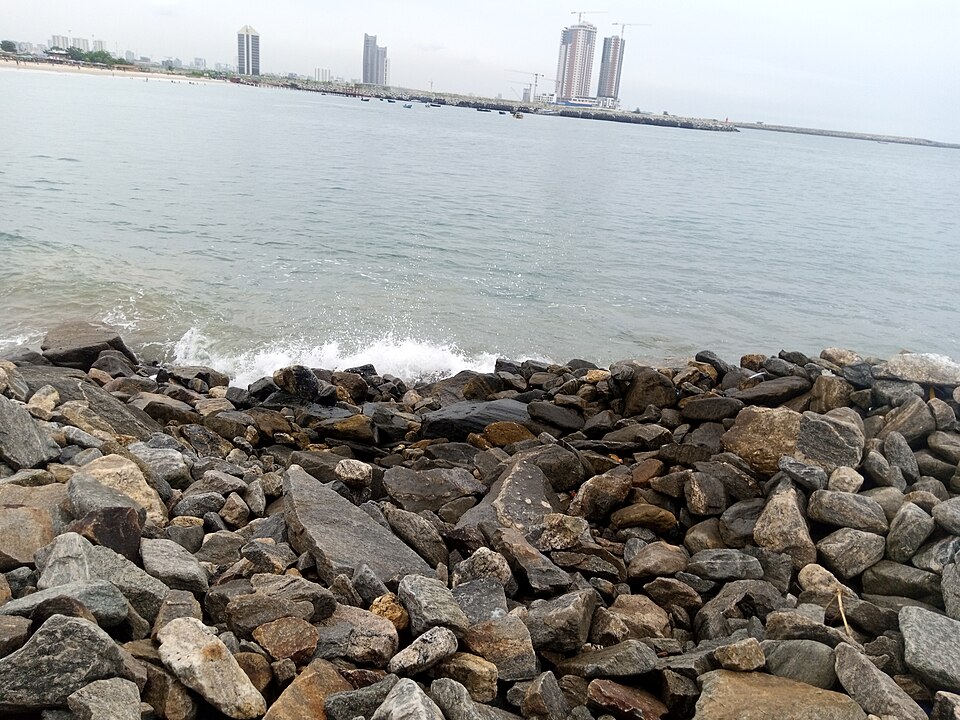
Tarkwa Bay, Lagos. Photo: OfficialKOL / Wikimedia Commons, CC BY-SA 4.0.
When I think about visiting Lagos, I don’t think first about the traffic or the skyscrapers. I think about the energy. That is what I would want you to experience. That, more than anything, is what I think a good Lagos travel guide should encourage you to do.
Not just see Lagos. Experience it.